Batch One: Bottling Day
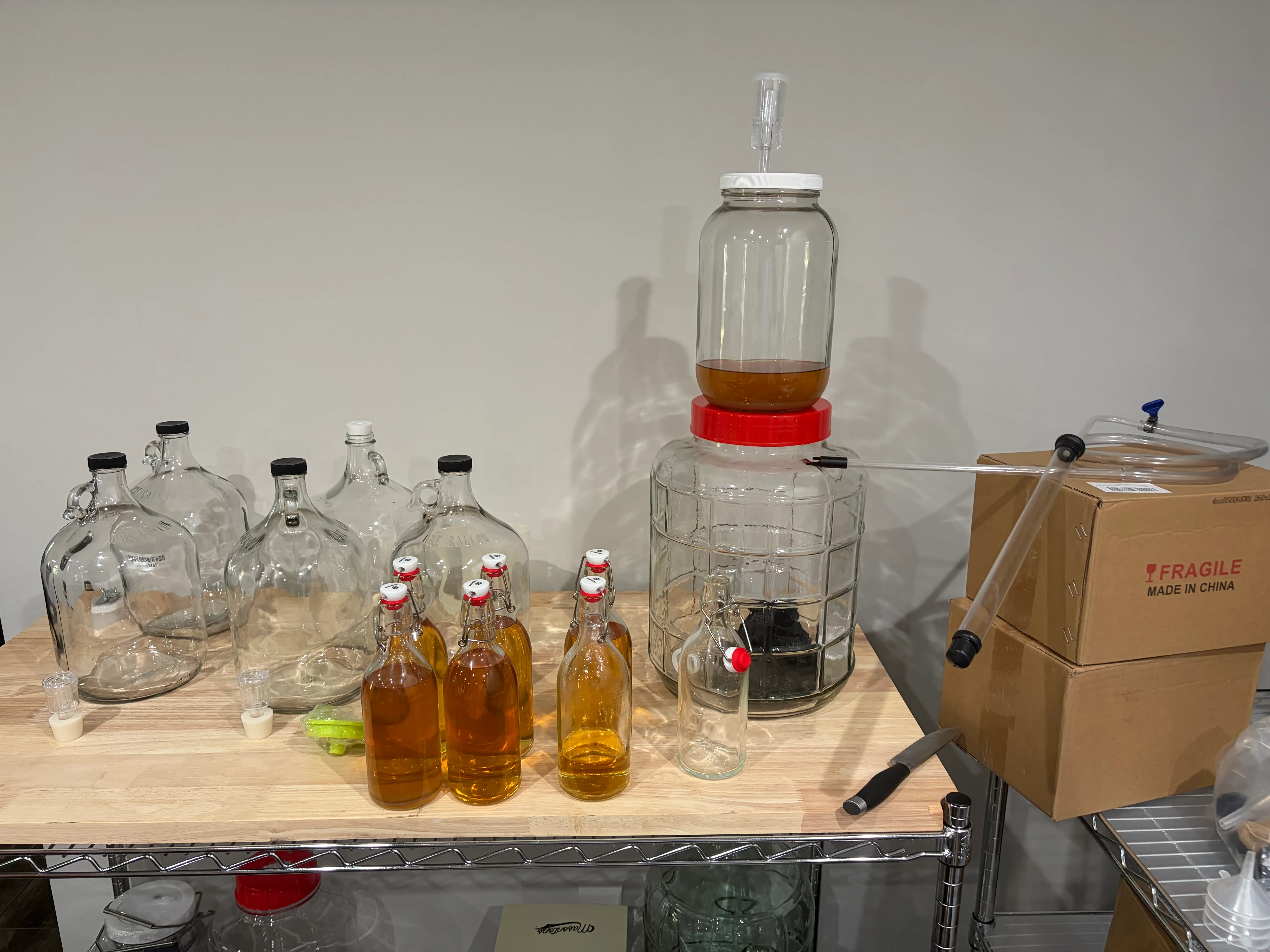
Batch One is in bottles. All of it. Forty-eight days after brew day, the mead that started as three and a half pounds of wildflower honey and a packet of 71B is sitting in swing-tops on the cart, and the jug that held it is empty and rinsed. This is the last chapter of the first batch, so it gets the full accounting: what went right, what I fumbled, and the three lessons I’m carrying into every batch after this one.
Finishing moves
When I left off last time, the plan was to sweeten off-dry, by taste, with a bench trial. That happened, and the bench trial is a technique I’ll never skip again.
Instead of guessing at honey and stirring it into the whole gallon — which you can’t take back — I pulled measured samples and dosed each one at a different rate. Tasted them side by side. The winner was 1.7 grams of honey per 100 ml, which works out to a finishing gravity of about 1.005: enough sweetness to round out the acidity and let the wildflower honey actually show up, without tipping into dessert territory.
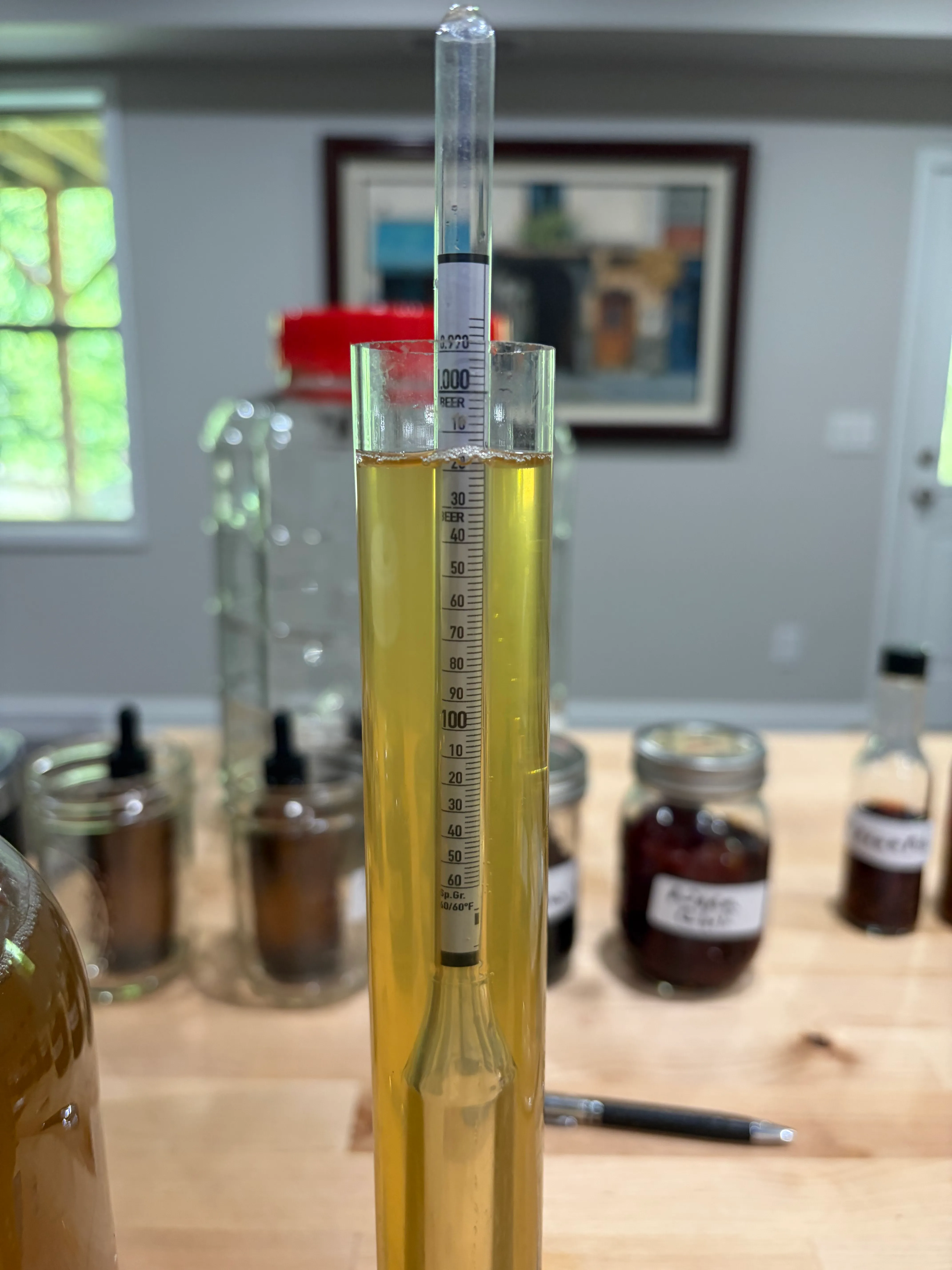
So the sequence went: stabilize (so the yeast can’t wake up and referment the new sugar), sweeten to the bench-trial number, then two weeks in the fridge to cold-crash clear. The hydrometer shot below is the sweetened mead sitting right on that 1.005 line — the last gravity reading Batch One will ever get.
The confession
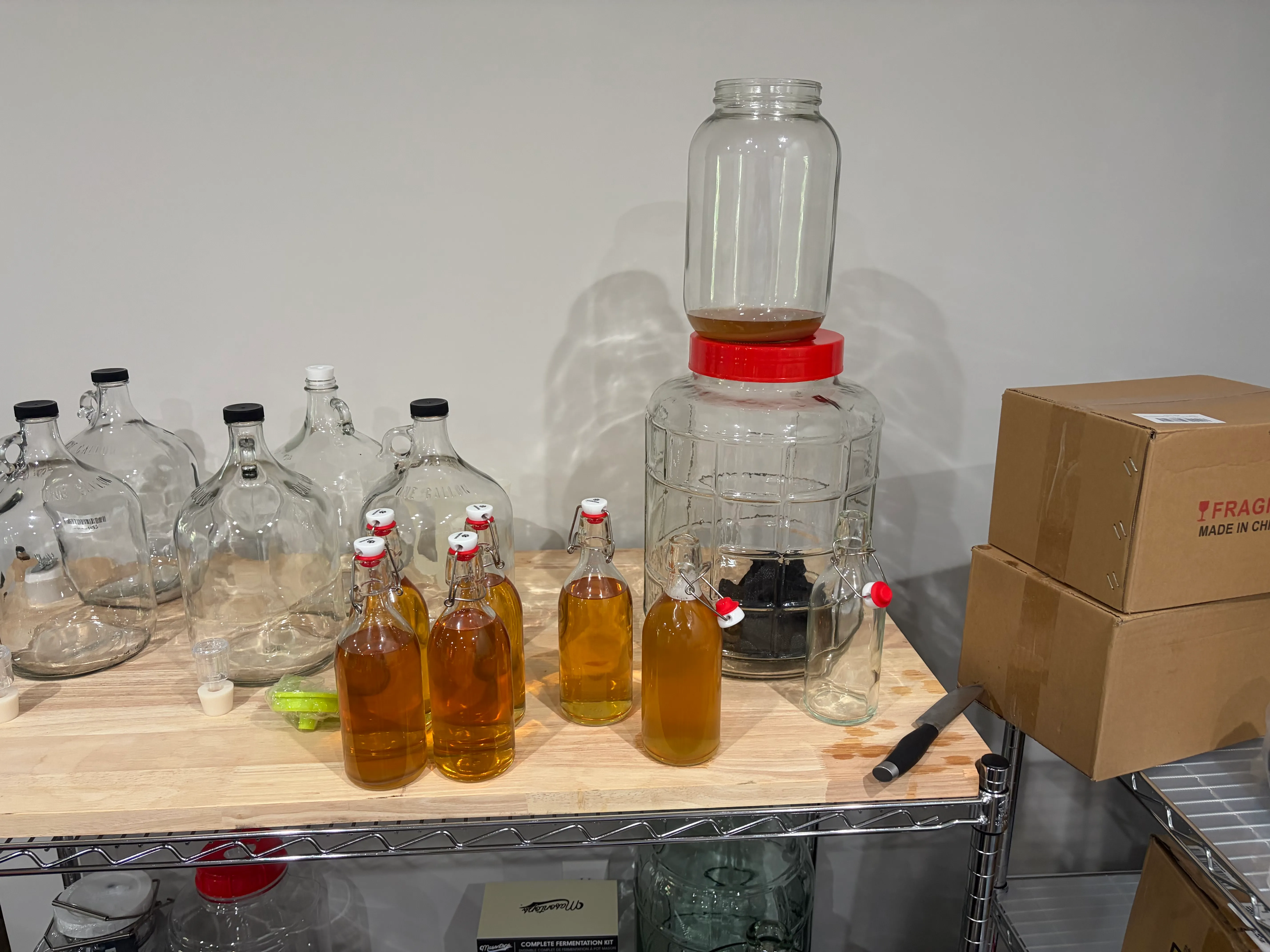
Bottling day itself was August 30th. I filled five 375 ml bottles, pulling clean mead off the compacted yeast bed, until the lees kicked up and told me the run was over. About half a bottle’s worth stayed behind in the jug to resettle, and it got bottled a few days later as bottle number six — you can spot it in the lineup, the hazy one. That’s not a flaw, that’s the bottom of the jug being honest.
And here’s the confession: I took zero photos on bottling day. Not one. I had the camera ten feet away and I was so locked into the siphon-and-fill rhythm — don’t disturb the lees, don’t splash, mind the headspace — that it never occurred to me until the gear was already in the sink. Every shot in this post was staged after the fact. The lineup photo is real mead in real bottles, but it’s a reenactment, and I’d rather tell you that than pretend otherwise. Add “photograph the process” to the bottling checklist, apparently.
The first cold pour
Of course I didn’t wait. First bottle went into the fridge, and that evening I poured the first glass of finished, bottled, chilled mead I’ve ever made.
The good news first: the wildflower honey is right there. Chilled, poured, in a proper glass — it reads as mead, with the floral honey character I was hoping survived a twelve-percent fermentation. That part works.
The rest is a young drink telling on itself. The yeasty back palate that’s haunted this batch since racking day is still the loudest thing in the glass — better than it was, but at fridge temperature with no thirty-minute warm-up grace period, it dominates the finish. And cold, the sweetness lands noticeably sweeter than I wanted. The 1.005 that tasted balanced at room temperature on the bench reads closer to a dessert pour straight from the fridge. I’d also expected the chill to sharpen the acidity, the way it does with white wine. It didn’t — which was my first clue about lesson two below.
None of this is a crisis. Young mead is famously awkward, and time in the bottle is the fix for exactly this kind of yeast character. So Batch One is officially parked until late November — three months of bottle age — before I pour the next one and judge it for real.
The three lessons
Every batch is tuition. Here’s what this one bought:
1. Bench-trial your sweetness cold. Sweetness perception moves with temperature, and I calibrated at room temp for a drink I’ll mostly serve chilled. Next dry-style batch gets a lower residual-sugar target — closer to 1.002–1.003 — and the bench-trial samples go in the fridge before the taste-off. Trial the drink at the temperature you’ll drink it.
2. Measure your acidity. Every batch. I never once measured TA or pH on Batch One. Not at brew, not at bottling. So when the balance reads sweet-heavy, I genuinely can’t say whether that’s too much sugar or too little acid — I have no number, only a guess. An acid test kit is next on the equipment list — and the pH meter I already own (used exactly once, on brew day, then forgotten in a drawer) is coming out for every batch from now on. You can’t balance what you didn’t measure.
3. More backbone. The oak did real work in secondary, but the finished mead could carry more structure — more of that grip that keeps sweetness from feeling soft. Future batches get a firmer oak hand, and I’ve started building a library of oak tinctures so I can dose it by the drop and find the line before committing a whole batch to it. More on that little project soon.
The tally
Batch One, final: wildflower traditional, OG 1.090 → fermented bone dry to 1.000 (~12% ABV), oaked and vanilla’d in secondary, stabilized, sweetened back to 1.005, cold-crashed, and bottled into six swing-tops. First honest verdict: promising, sweet-leaning, still too yeasty, and none of it a surprise for a mead this young.
The empty jug didn’t stay lonely. Batches Two and Three are already fermenting — a tupelo co-brew that reads nearly dry as I write this — so the cart’s next chapter started before this one ended. But those six bottles on the shelf are the first thing I’ve ever made that started as honey and ended as wine, and I’m going to let them sit there looking like an accomplishment until November tells me whether they are one.