
Batch One: It Turned Into Wine
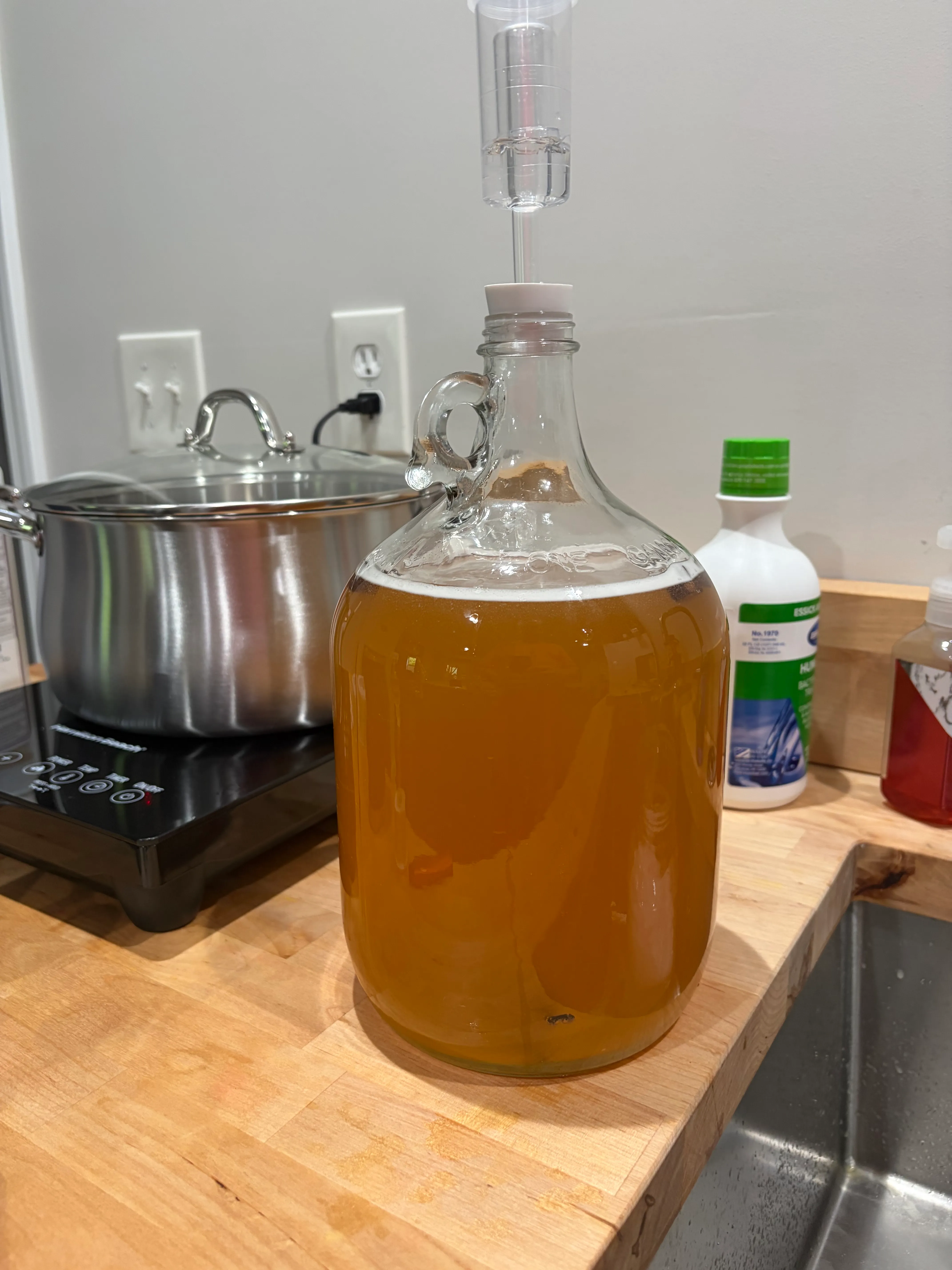
At racking day I gave my first honest tasting note, and it wasn’t a rave: dry, lemony, a little flat in the body, and still noticeably yeasty. I said the flatness had “known levers” and that pulling them was the whole point of the next phase. A week later, I can report the levers work.
The thirty-minute rule
Here’s the thing nobody tells you about tasting young mead: give it a minute. Literally.
Pull a sample straight from the jug and the first thing you get is the yeast — that raw, bready, still-fermenting smell that was all over the racking-day note. It’s easy to taste that and get discouraged. But let the glass sit and breathe for about half an hour, and the yeast blows off. What’s underneath is a completely different drink.
And underneath, this week, it smells like Sauvignon Blanc. Bright, a little citrusy, a clean white-wine nose — with something rounder sitting behind it that I’m fairly sure is a still champagne’s cousin. The first time it read that way I actually went back and smelled it again to make sure I wasn’t talking myself into it. I wasn’t.
What the oak and vanilla did
This is the payoff from the four French oak cubes and the split Tahitian vanilla bean that went in at racking. A week of contact and the “flat in the body” problem is mostly gone. The oak put structure back — that little grip across the middle of the sip that bone-dry mead was missing — and the vanilla did its quiet trick of reading as roundness without adding a gram of sugar. Together they filled in the hollow middle that made the racking-day sample feel thin.
It’s not finished. There’s still a faint yeastiness on the very back of the palate — expected, this fresh off primary, and it’ll keep fading with time off the lees. But the shape of the thing is there now, and it’s a good shape.
Knowing when to stop
The temptation with results this encouraging is to leave everything in and let it keep going. That’s exactly how you get an oak bomb. Four cubes in a single gallon extract fast, and the line between “structured” and “tastes like a plank” is about a week of not paying attention.
So I’m giving it a few more days on the oak and vanilla, tasting as I go, and pulling the cubes and the bean the moment it reads right rather than more. With oak, “one more week” is a trap.
The sweetening plan
Once the oak comes out, the last move is sweetness — and I’ve made up my mind on direction. This won’t go all the way to semi-sweet. I want it just off-dry: enough residual sweetness to round the finish and lift the fruit, but nothing that reads as a dessert wine. Given how Sauvignon-Blanc-like it’s drinking, a crisp, barely-sweet white is exactly the target.
The how matters as much as the how-much. Before anything goes into the gallon, I’ll stabilize it — so the sweetening honey can’t kick off a fresh fermentation in the bottle — and then dial in the sweetness the safe way: bench trials. Little tasting-glass experiments, a measured drop of honey syrup at a time, until it lands. Any mistakes happen in a two-ounce glass instead of a one-gallon jug. Whatever wins gets scaled up and stirred in, using the same wildflower honey this all started as.
Where it stands
Still aging under airlock, oak and vanilla still working, a few days from coming off both. From “flat and yeasty” to “smells like Sauvignon Blanc” in one week — that’s the fastest this batch has moved since fermentation, and the first time it’s tasted less like a science project and more like something I’d pour for someone.
Batch one vitals: OG 1.090 → FG 1.000 · ~12% ABV · dry, aging off-dry · one week on four French oak cubes + one Tahitian vanilla bean · sweetening by bench trial, soon.