
Traditional Wildflower Mead (Batch 1)
A one-gallon traditional dry mead: three pounds of raw Georgia wildflower honey, Lalvin 71B, staggered Fermaid O, and two French oak cubes in primary. As brewed, mistakes included.
Traditional Wildflower Mead (Batch 1)
Ingredients
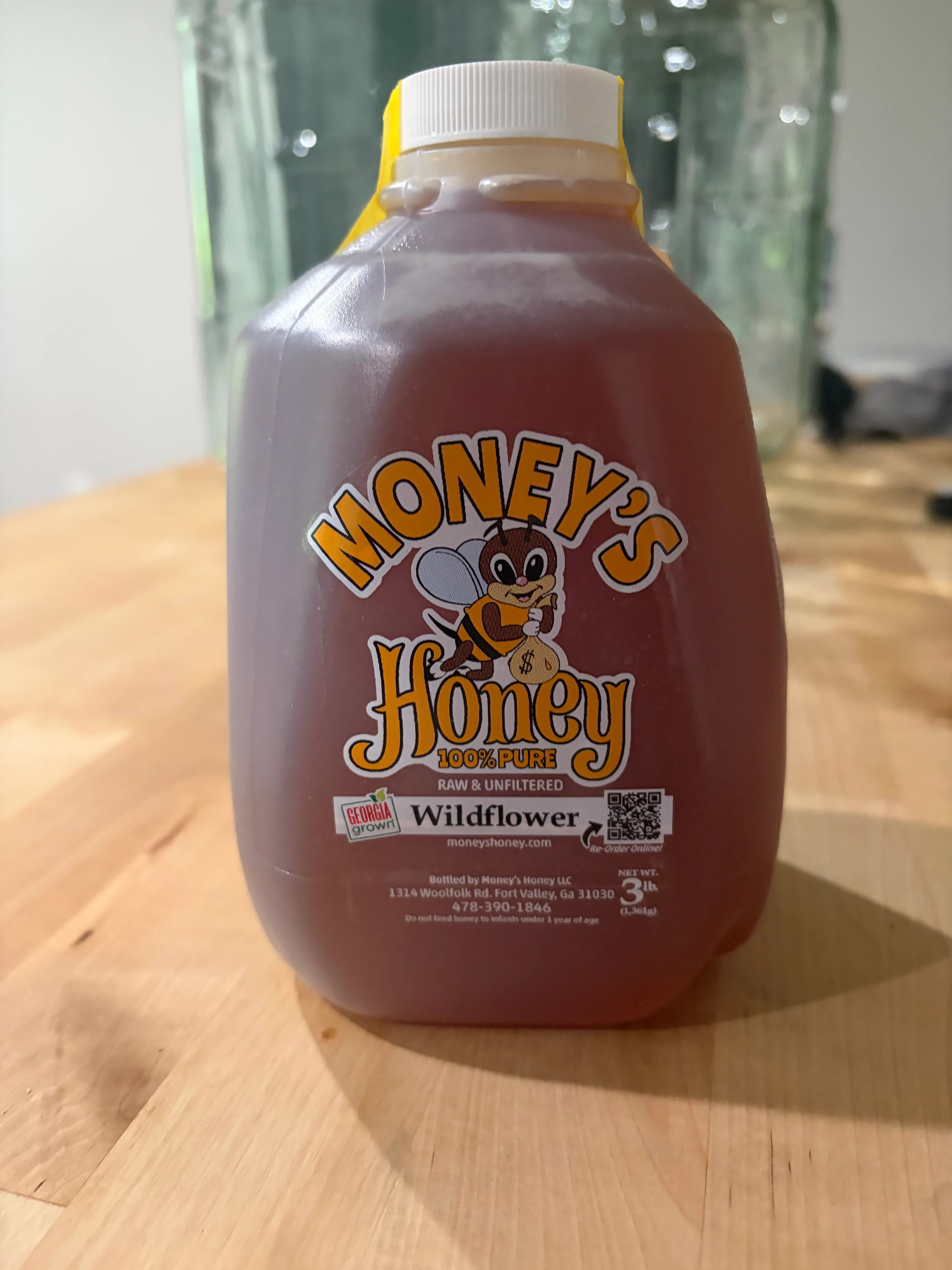
- 3 lbs Money's Honey Wildflower honey — raw, unfiltered (Fort Valley, Georgia)
- 1 gallon Crystal Geyser spring water
- 1 packet (5 g) Lalvin 71B yeast
- 4 tsp Fermaid O yeast nutrient, divided (pitch, 24 h, 48 h, 72 h)
- 2 French oak cubes, ~1/2 inch each, sterilized (optional, added day 4)
Method
- Sanitize everything that touches the must: fermenter, whisk, hydrometer, test jar, airlock.
- Heat about half the water to ~120°F. Whisk in all the honey until fully dissolved — when you think you have mixed enough, give it 3–4 more minutes.
- Top up with the remaining cool water to reach ~1 gallon and bring the must below 100°F. Take a hydrometer reading and write it down (target OG ≈ 1.090; sanity-check against the math — ~35 points per pound of honey per gallon).
- Rehydrate the 71B with a first dose of Fermaid O in ~100°F water for 15 minutes, then pitch into the must and whisk hard to aerate.
- Ferment at basement temperature with an airlock. For the first 3 days: stir/degas twice daily and aerate while stirring — oxygen is good only in this window. Feed 1 tsp Fermaid O at 24, 48, and 72 hours.
- After the 72-hour feeding, seal with the airlock and stop aerating. Optional: add 2 sterilized French oak cubes plus their sterilizing tea for structure — primary oaking extracts gentler tannin than aging oak.
- Leave it alone. Check gravity every few days; the must stays cloudy while the yeast work, and a silent airlock usually means a leaky lid, not a dead fermentation — trust the hydrometer, not the bubbles.
- When two gravity readings a few days apart match (expect ~1.000 for dry) and a yeast cake has formed, rack once into a clean carboy, topped up to the shoulder, and age under airlock. Taste at racking to decide if the oak cubes come along.
- Age in bulk until clear and the flavors knit — weeks at minimum, months for real reward — then bottle.
Brew specs
| OG | 1.090 |
|---|---|
| FG | 1.000 |
| ABV | ~12% (projected — batch in progress at 1.030) |
| Yeast | Lalvin 71B |
| Nutrient | Fermaid O, staggered: pitch / 24 h / 48 h / 72 h (~1 tsp each) |
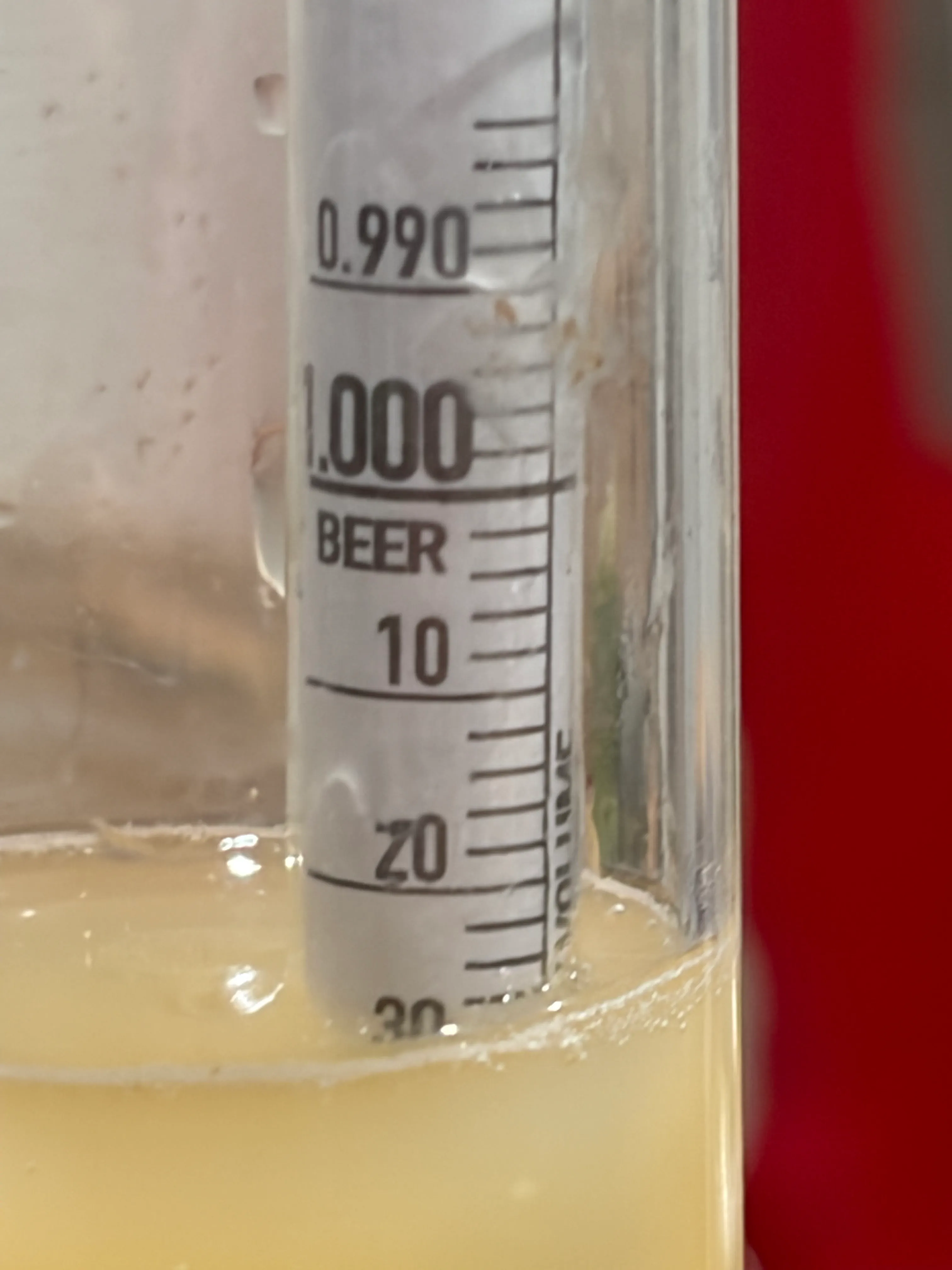
This is Batch 1 exactly as I brewed it — the recipe behind Brew Day and Week One, written down as done rather than as planned. The batch is still fermenting as I publish this: it read 1.030 at the one-week mark, tasting off-dry and on its way to a dry finish around 12%. I’ll update the final gravity and any lessons at bottling.
A few notes that the numbered steps can’t carry:
On the honey: use local, raw honey from a real beekeeper if you can get it. Three pounds per gallon puts you in traditional territory — enough to matter, not so much that the yeast quits early.
On the yeast: my 20-year-old source recipe called for a different strain; current practice favors newer wine yeasts. 71B runs to about 14% tolerance and finishes fruity, which suits a first traditional. It will take 1.090 all the way dry.
On the nutrients: honey is nutrient-poor, so staggered feeding (the TOSNA approach) beats one big dose — feed the yeast while they’re multiplying in the first 72 hours, then stop. Fermaid O is the current name for what older guides call Fermaid B.
On patience: the fermentation takes about two weeks. The mead takes months. They are not the same timeline, and the second one is the one that makes it good.