
Batch One: Week One
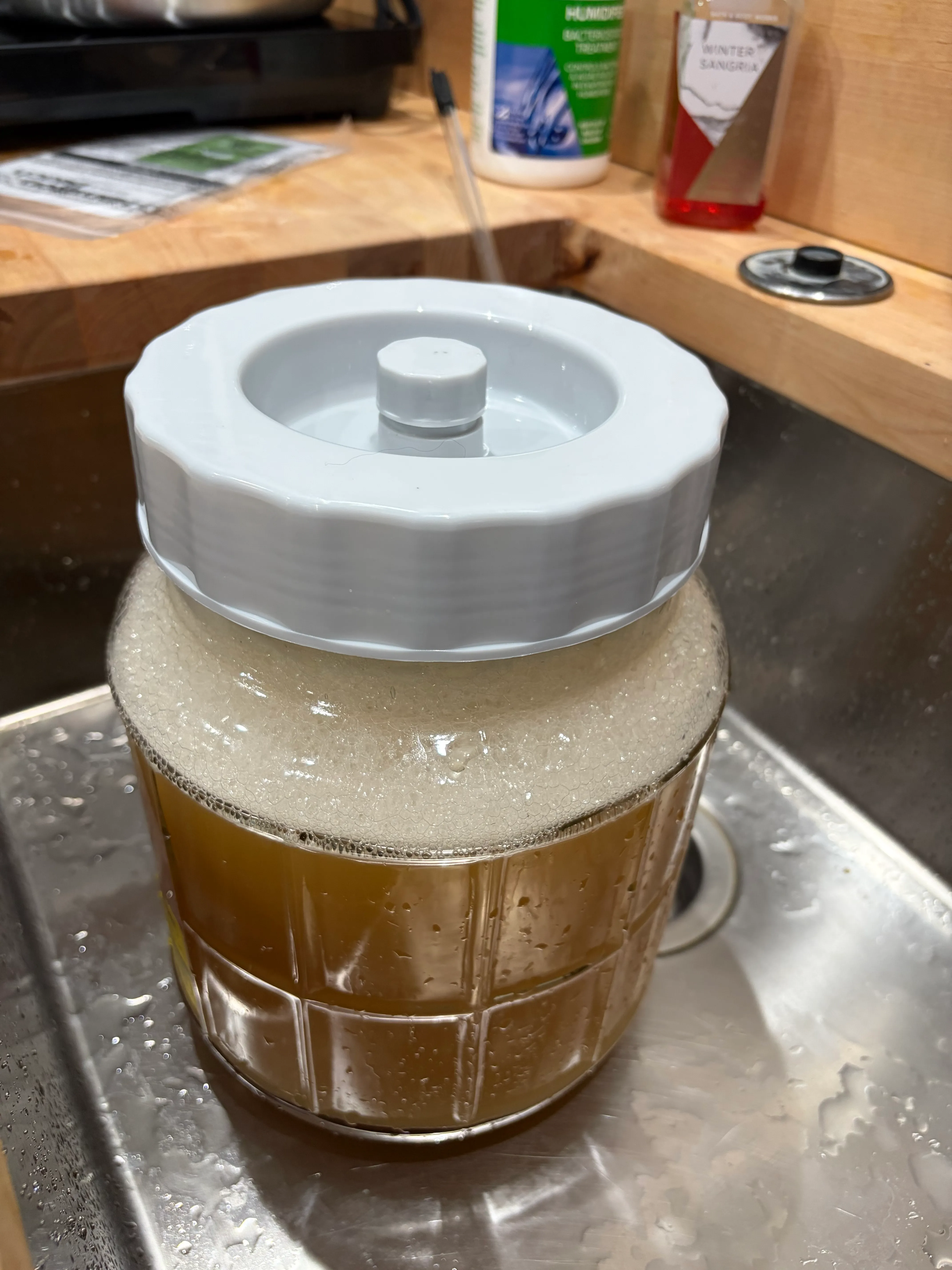
One week ago I mixed three pounds of Georgia wildflower honey into a gallon of water, pitched a packet of 71B, and argued with a hydrometer. This is what the seven days since actually looked like — including the part where the airlock went silent and I briefly wondered if I’d killed the whole thing.
Spoiler: the batch is fine. The airlock was lying. More on that below.
48 hours: the yeast shows up to work
By the second day the must had a thick foam cap — brewers call it krausen — and the gravity had moved from 1.090 to 1.080. Ten points in two days is the yeast saying it likes the accommodations.
This is also the busy window I mentioned in the brew day post. Twice a day I stirred it hard: partly to drive off the CO₂ that builds up in suspension (degassing), partly to whip some oxygen in. That second part sounds like heresy if you come from wine or beer — oxygen is the enemy, right? Not yet. During the first three days the yeast are multiplying rather than just fermenting, and they use oxygen to build strong cell walls. Aerate hard early, then stop. It’s the “then stop” that matters.
The nutrient schedule kept pace too. Honey is nutrient-poor compared to grape must, so I fed a teaspoon of Fermaid O at the 24-hour and 48-hour marks — the staggered-feeding approach (the full version is called TOSNA) that replaced the old dump-it-all-in-at-the-start method. Feed the yeast while they’re multiplying, taper off once they settle in to ferment.
72 hours: sealing it up
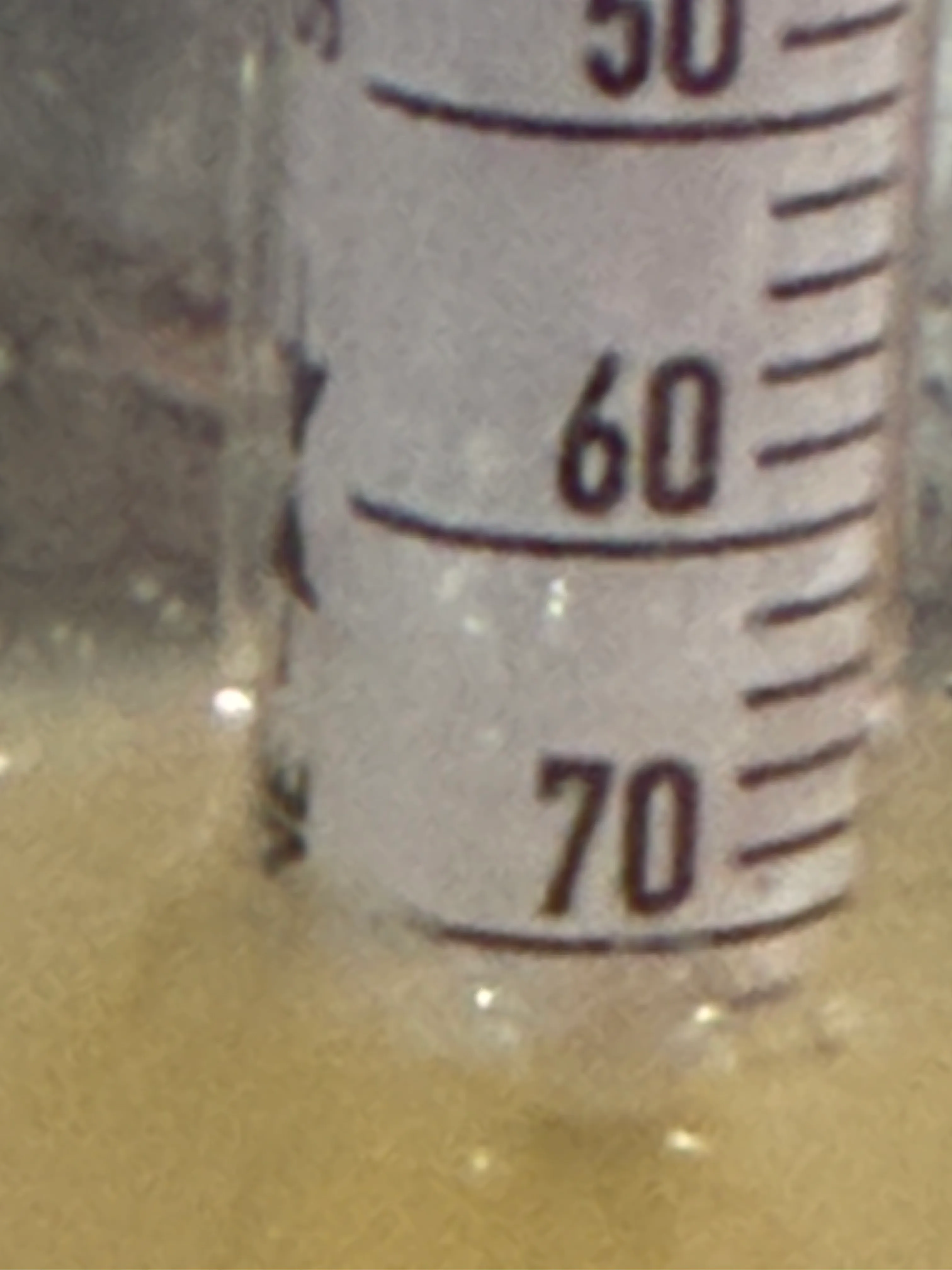
Third-day gravity: 1.065. Down fifteen points in a day — the fermentation was accelerating, which is exactly the curve you want. That reading came with the third nutrient dose, and it marked the end of the oxygen window.
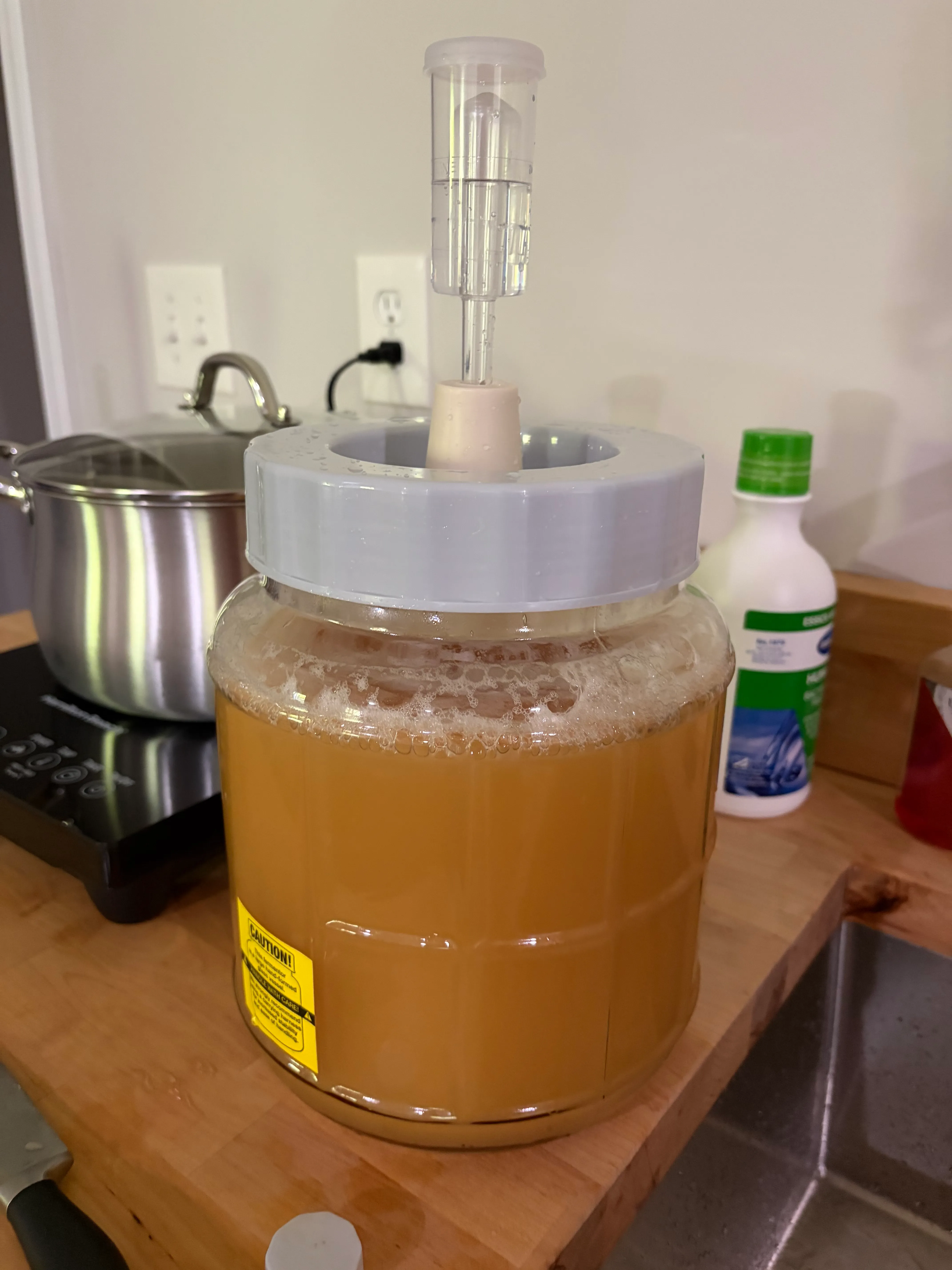
So on went the three-piece airlock. From this point the rules invert: no more aeration, no more opening the lid to admire it. The yeast go anaerobic — which is when they stop multiplying and get serious about making alcohol — and the CO₂ they produce blankets the surface and protects everything underneath. The best thing I could do now was leave it alone.
Which, it turns out, is harder than it sounds.
The oak experiment
Here’s where I went off-recipe, on purpose this time. On the advice of an experienced brewer, I sterilized two French oak cubes — about a half-inch each — and added them to the must along with the “tea” from sterilizing them.
Adding oak during primary fermentation sounds aggressive, but it’s a real technique with a real rationale: the yeast actually metabolize some of the harsher tannin compounds as they work, so oak added now comes out gentler and rounder than the same oak added during aging. Two small cubes in a gallon is a structure dose, not a flavor bomb — I’m after a little backbone under the honey, not a lumberyard.
The same brewer’s advice came with a discipline clause: hands off until the one-week reading. No peeking, no stirring, no sampling. Just the airlock and me, watching each other.
The part where the airlock stopped talking
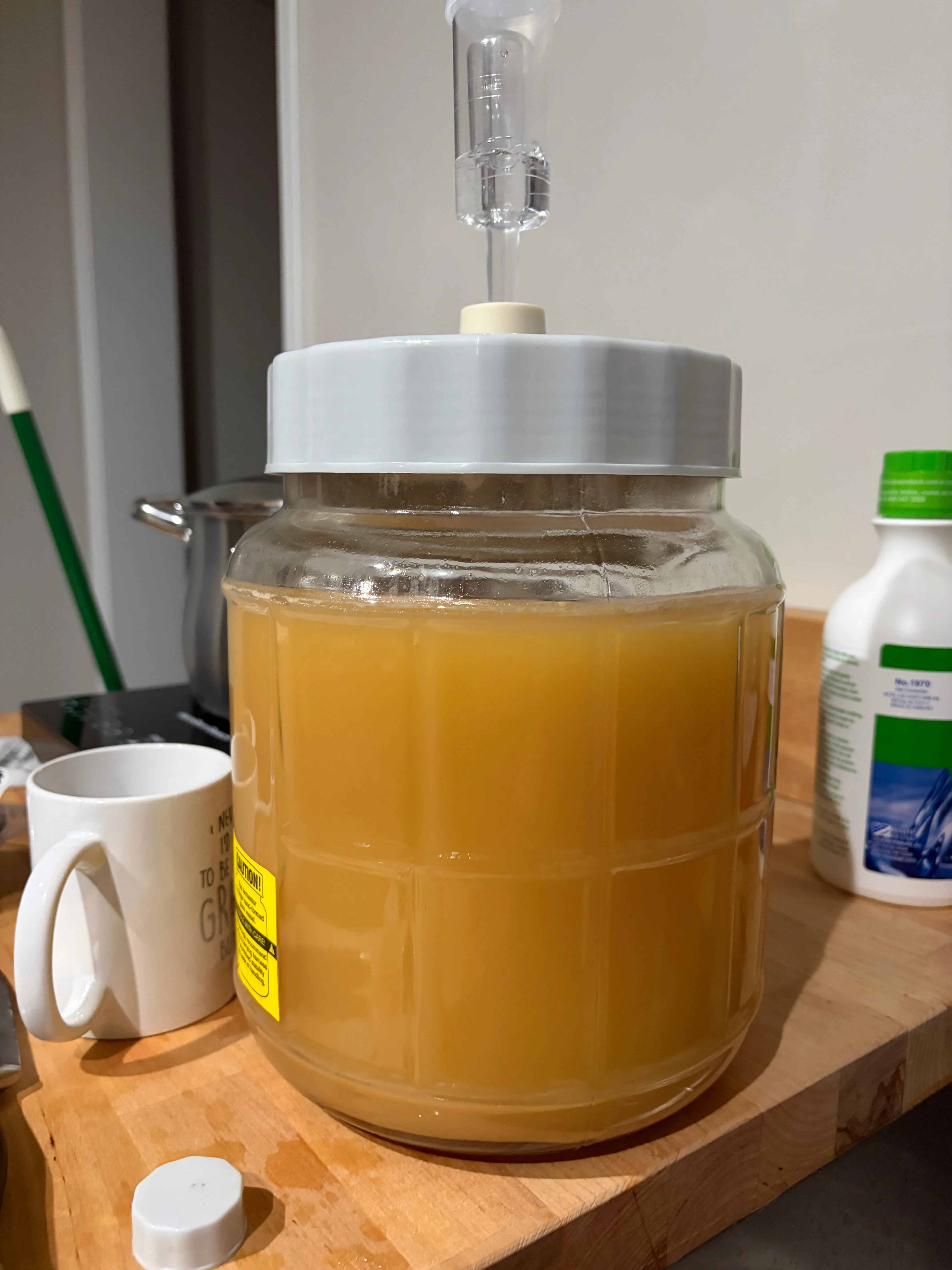
A couple of days into the hands-off stretch, I noticed the airlock had gone completely silent. No bubbles. None. Meanwhile the must looked like this — an opaque, milky amber that hadn’t been anywhere near that cloudy on brew day.
If you’re new to this, that combination reads like a death notice: fermentation stopped AND something went wrong. The truth is nearly the opposite on both counts.
The cloudiness is billions of yeast cells in suspension. It’s what a healthy fermentation looks like in the middle of the job — the must doesn’t clear until the yeast finish and settle out. A crystal-clear must one week in would actually be the scary sign.
And the silent airlock? My fermenter is a wide-mouth vessel with a big gasketed lid, and those lids are famously imperfect sealers. The CO₂ was simply taking the path of least resistance — out around the lid instead of through the airlock. The batch was venting the whole time; it just wasn’t doing it where I could watch.
The lesson, which I keep re-learning in different costumes: the airlock is entertainment, the hydrometer is evidence. An airlock tells you about your lid gasket. A hydrometer tells you about your fermentation. Only one of those is worth losing sleep over.
One week: the first taste
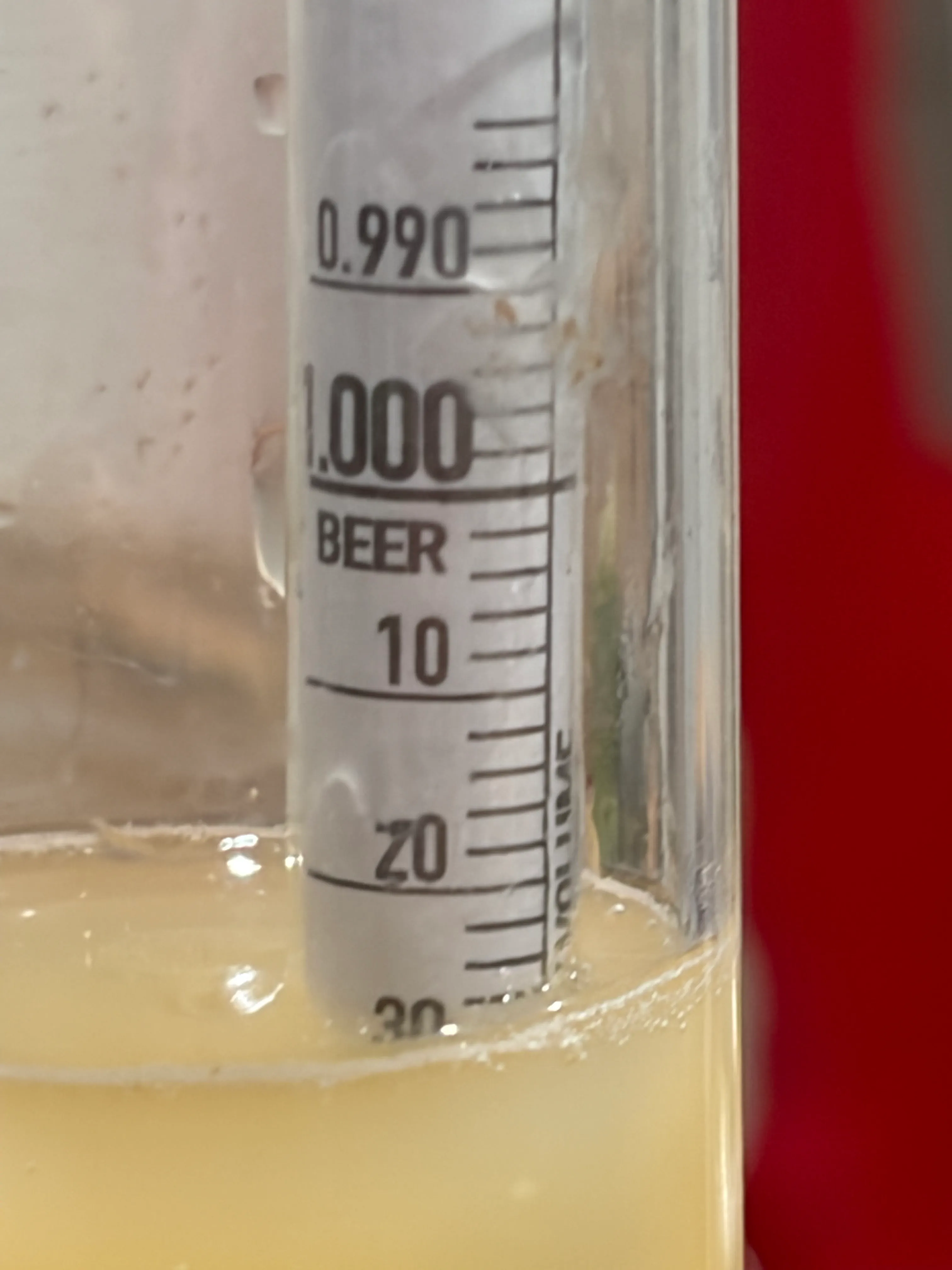
The one-week reading — the first since the airlock went on — came in at 1.030. From 1.090, that’s sixty points down, which works out to right around 8% ABV already, with the yeast still fully suspended and visibly working.
And because pulling a hydrometer sample means you have mead in a tube anyway: the first taste. Off-dry, honey still clearly present but no longer syrupy, young and rough the way everything is at a week old — and unmistakably mead. The sweetness on my tongue matched what the hydrometer claimed, which after brew day’s reading fiasco felt like the instruments and I had finally reached an understanding.
Nothing has settled out yet — no yeast cake on the bottom — which means the colony is still fully at work. At this pace the batch should ferment dry, somewhere near 1.000, over the next week or two. That would land the finished mead around 12% ABV, right on the original target.
Week one specs
| Spec | Value |
|---|---|
| OG (brew day) | 1.090 |
| 48 hours | 1.080 |
| 72 hours | 1.065 — airlock on |
| One week | 1.030 — taste-confirmed off-dry |
| ABV so far | ~8% |
| Additions | Fermaid O at pitch, 24 h, 48 h, 72 h · 2 French oak cubes (½”) in primary |
| Projected finish | Dry (~1.000), ~12% ABV |
What happens next
The plan from here is patience with a checklist. I’ll keep reading gravity every few days. When two readings a few days apart come back identical — and there’s a proper yeast cake on the bottom of the fermenter — the batch gets its one and only racking: siphoned off the settled yeast into a glass carboy, topped up to the shoulder, sealed with a bung and airlock that actually seal. That transfer also retires my leaky-lidded fermenter for this batch, which is a problem worth solving only once the CO₂ blanket stops being made.
At racking time I’ll taste again and decide whether the oak cubes ride along or stay behind. And then the real waiting begins — the part measured in months, where the only job is to not touch it.
One week in, this hobby has already taught me more about patience than the last several put together. The mead, meanwhile, could not care less about my feelings and just keeps quietly turning honey into alcohol. I respect that about it.