
cooking recipes
A Gallon of Vanilla, Two Kinds of Bean, and a Bottle of Rum
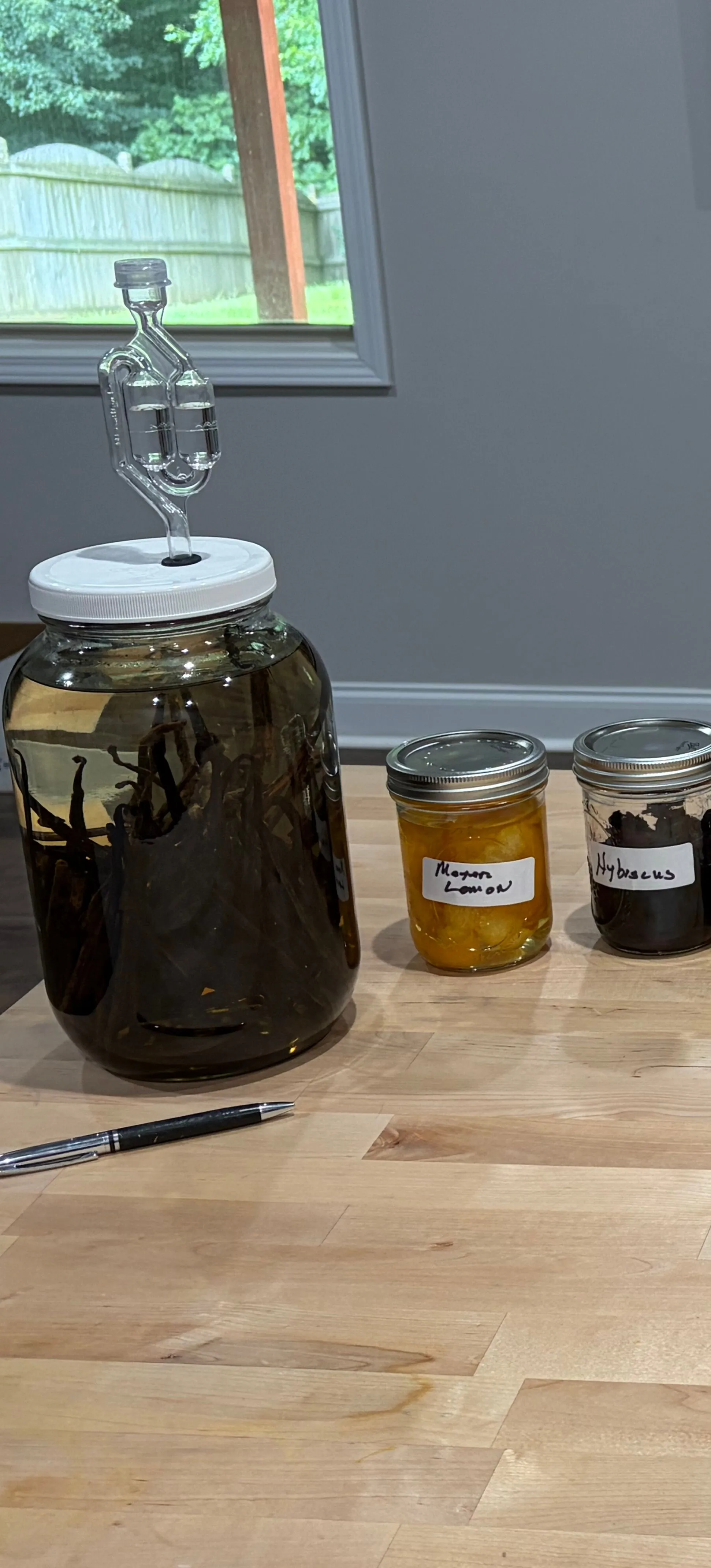
Real vanilla extract is embarrassingly simple to make and absurdly better than what’s on the shelf. It’s three things — beans, alcohol, time — and the only hard part is the waiting. This week I put up a full gallon of it.
The build
One gallon of rum, and a 50/50 split of two kinds of bean: Tahitian and Madagascar (Bourbon). Beans split lengthwise to open them up, dropped in, sealed, and set aside to steep for the next few months. That’s the entire recipe. It’ll shake weekly and get its first taste around week eight, though extract only gets deeper the longer it sits — plenty of people run theirs six months to a year.
Two choices in there are worth explaining.
Why rum
Most extract is made in vodka, for the same reason most tinctures are: neutrality lets the vanilla speak. But vanilla is the one flavor where I want the base spirit to have an opinion. Rum’s molasses warmth sits under vanilla beautifully — it’s a classic, cozier pairing than the clean neutrality of vodka. I used a light, clean rum (Don Q Cristal) so it supports the vanilla without turning the whole thing into a cocktail.
Why two beans
Vanilla isn’t one flavor. Madagascar beans are what your brain means when it thinks “vanilla” — sweet, creamy, custard-like, the classic. Tahitian beans go somewhere else entirely: floral, cherry-like, a little anise, more perfume than pastry. Blend them fifty-fifty and you get an extract with both the comforting base and the high floral notes — rounder and more complex than either bean alone.
The mead connection
This isn’t only a baking project. I’m keeping some of it back as a controlled vanilla for the mead — dosed exactly like the spice tinctures: a few measured drops at a bench trial when a batch wants roundness. Batch one got a whole Tahitian vanilla bean riding along in secondary, and it’s doing lovely things — but a bean is a blunt instrument compared to an extract I can measure by the drop. I’m keeping whole beans aside too, for the batches that want the bean-in-the-jug approach.
So: one gallon, doing double duty. A pantry staple for the kitchen, and a precision flavor tool for the mead bench. All it costs is a few months of doing nothing, which is the best kind of cooking there is.