
Batch One: Racking Day
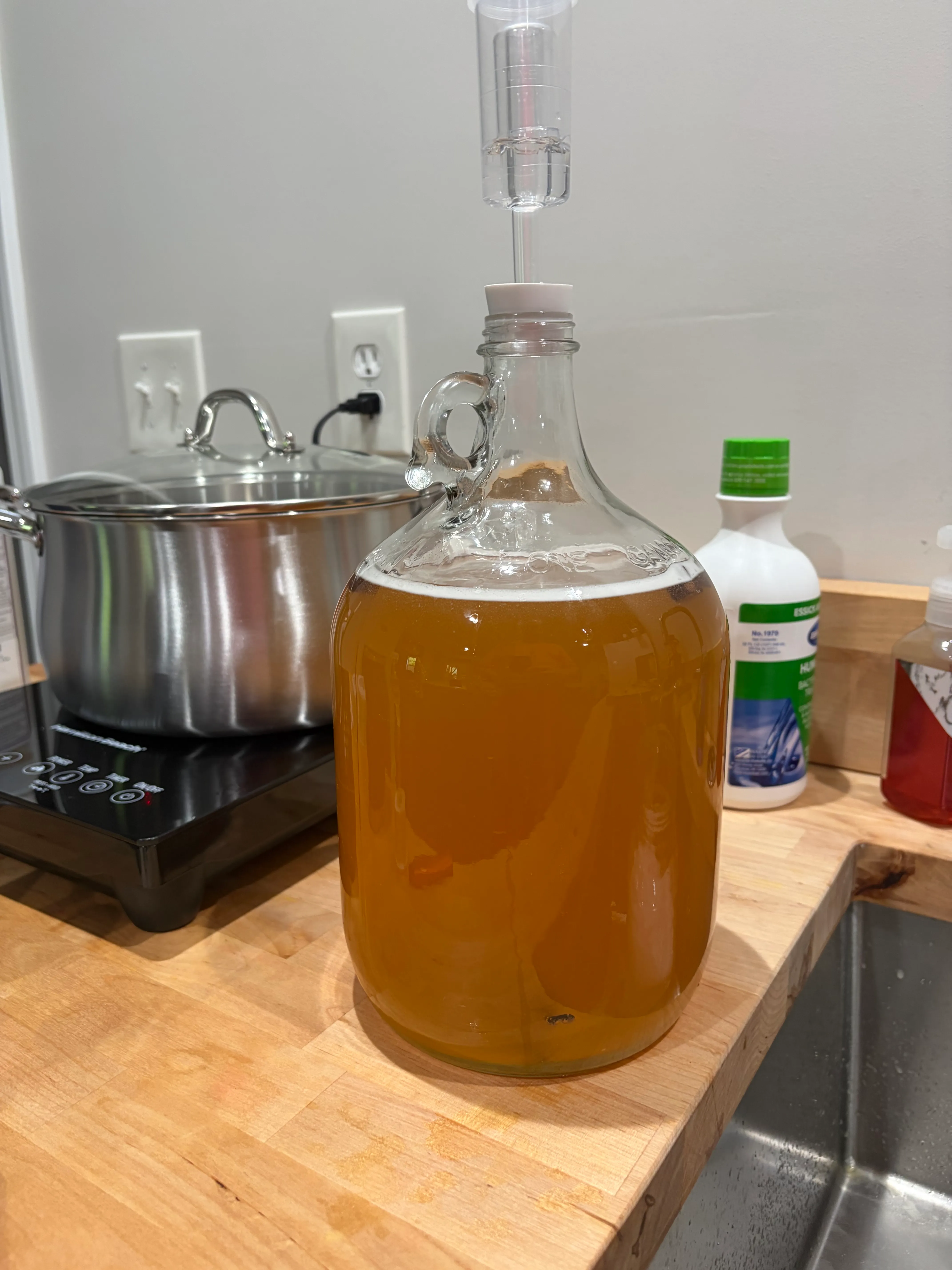
Two weeks ago the airlock taught me not to trust it. This week the hydrometer paid off the lesson: two readings, four days apart, both sitting dead on 1.000. That’s the signal I’d been waiting for since brew day. Fermentation is done. Batch one is officially mead — and today it moved into its second home.
The finish-line clock (and how it resets)
Here’s the rule I’ve been living by: fermentation isn’t finished when the airlock goes quiet, or when the mead clears, or when it looks done. It’s finished when two hydrometer readings taken days apart say the same number. Sugar still dropping means yeast still working, no matter how pretty the glass looks.
What I didn’t fully appreciate until this batch: the clock resets. On day 10 I read 1.020 and started counting. Two days later it read 1.000 — twenty points lower. That’s not confirmation, that’s a moving target, so the 1.020 got thrown out and 1.000 became reading number one. Sunday I pulled another sample:
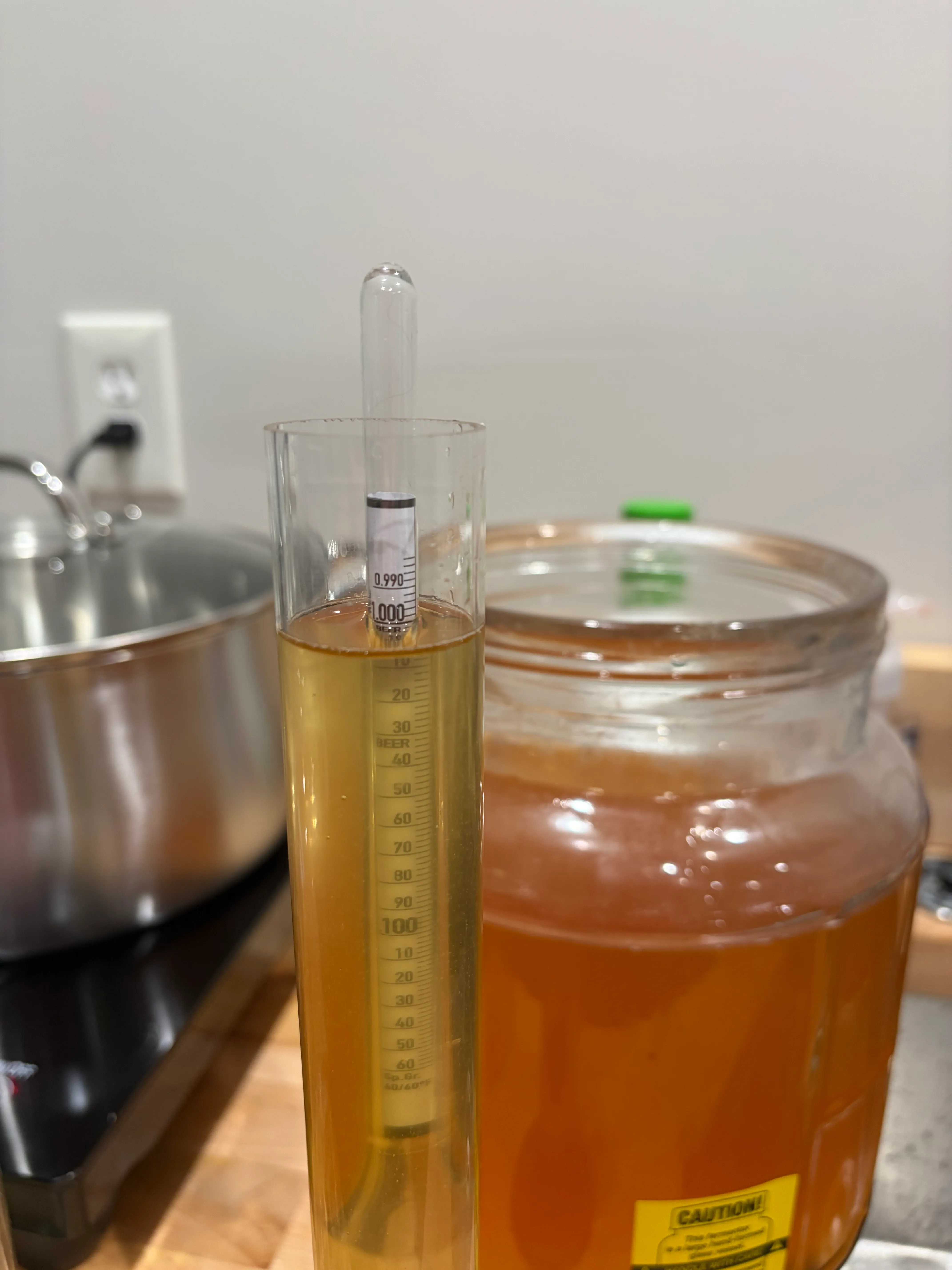
Still 1.000. Two matching readings. Done.
The final math: started at 1.090, finished at 1.000. That works out to right around 12% alcohol, bone dry — almost exactly what the recipe predicted back when this was three pounds of wildflower honey dissolving badly in a stockpot. There’s something satisfying about a plan from a month ago landing on its number.
The first honest taste
Pulling a hydrometer sample means you have a few ounces of mead in a test jar, and it would be irresponsible science not to drink it.
So, the first real tasting note of my first batch: dry, with lemon notes, a little flat in the body, and a noticeable yeastiness in the nose and on the tongue.
If that sounds underwhelming — it’s actually right on script, and learning to read the script is the interesting part. The lemon is the yeast strain talking; 71B is known for throwing fruity, citrusy notes, and they soften with age. The yeastiness is because this sample came straight off a fermenter with a yeast cake on the bottom — time and today’s racking deal with that. The flatness is what bone-dry tastes like: there’s no residual sugar left to carry the middle of the sip. That one doesn’t fix itself, but it has known levers, and pulling them is the whole point of the next phase.
Moving day
Racking, if you’re new to the word like I was recently: siphoning the mead off the sediment into a clean vessel, leaving the spent yeast and the trub behind.
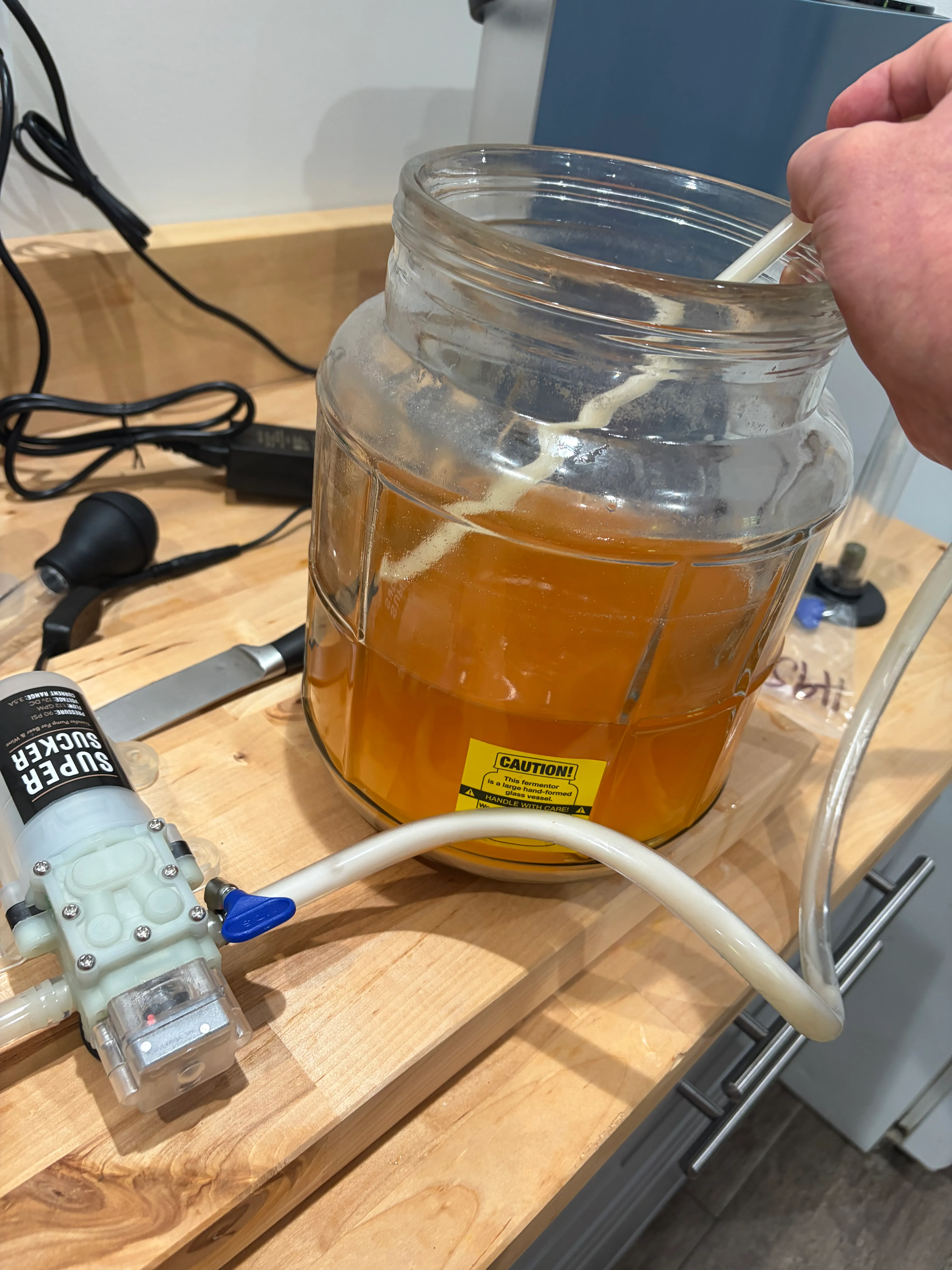
I used a small transfer pump rather than gravity-siphoning, which kept the whole thing closed, quick, and — the part that actually matters — gentle. Now that fermentation is over, oxygen goes from “yeast food” to “the enemy.” The same stirring I was doing enthusiastically in week one would be sabotage today. Same batch, opposite rules, and the calendar is the only thing that changed.
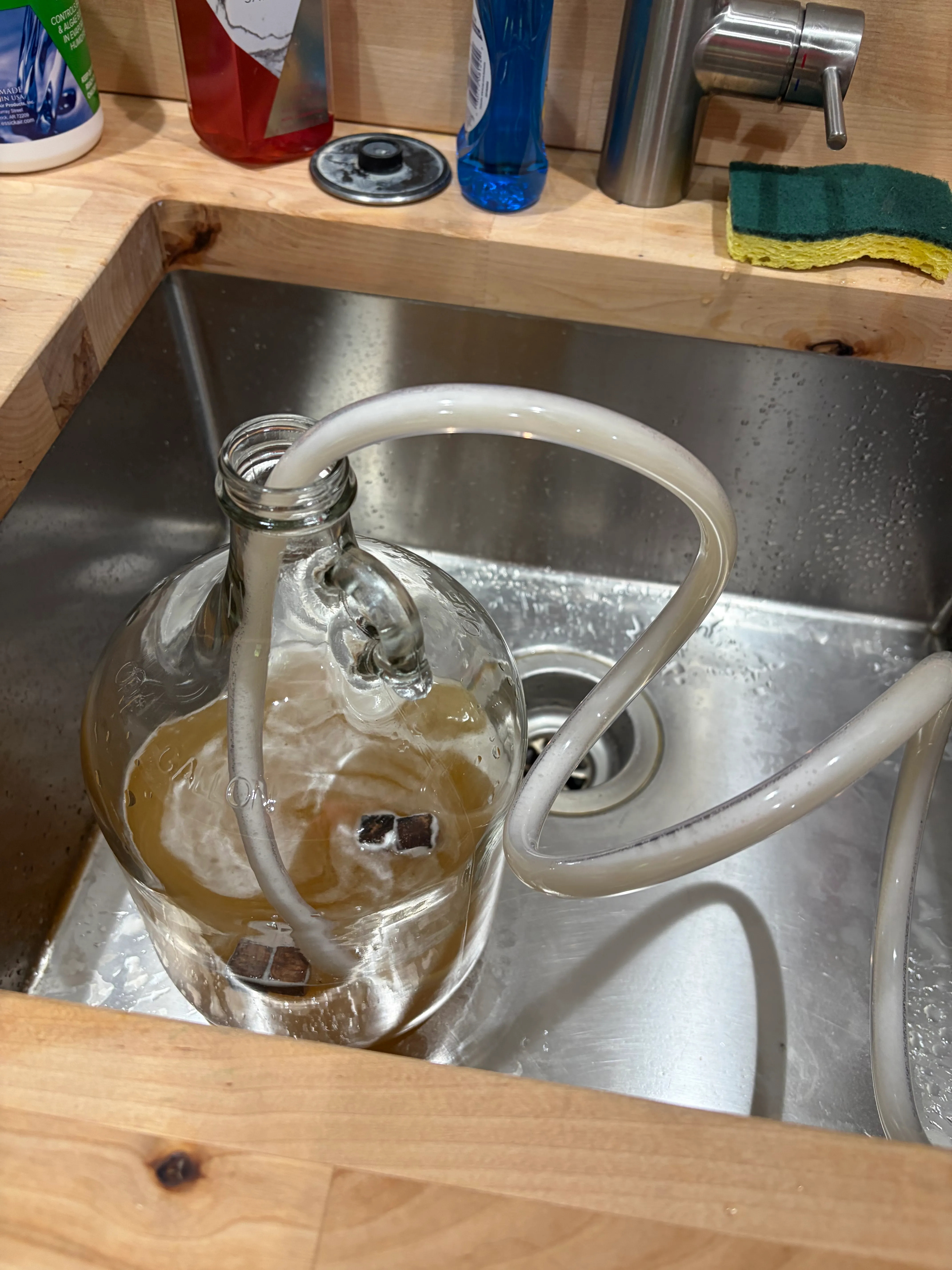
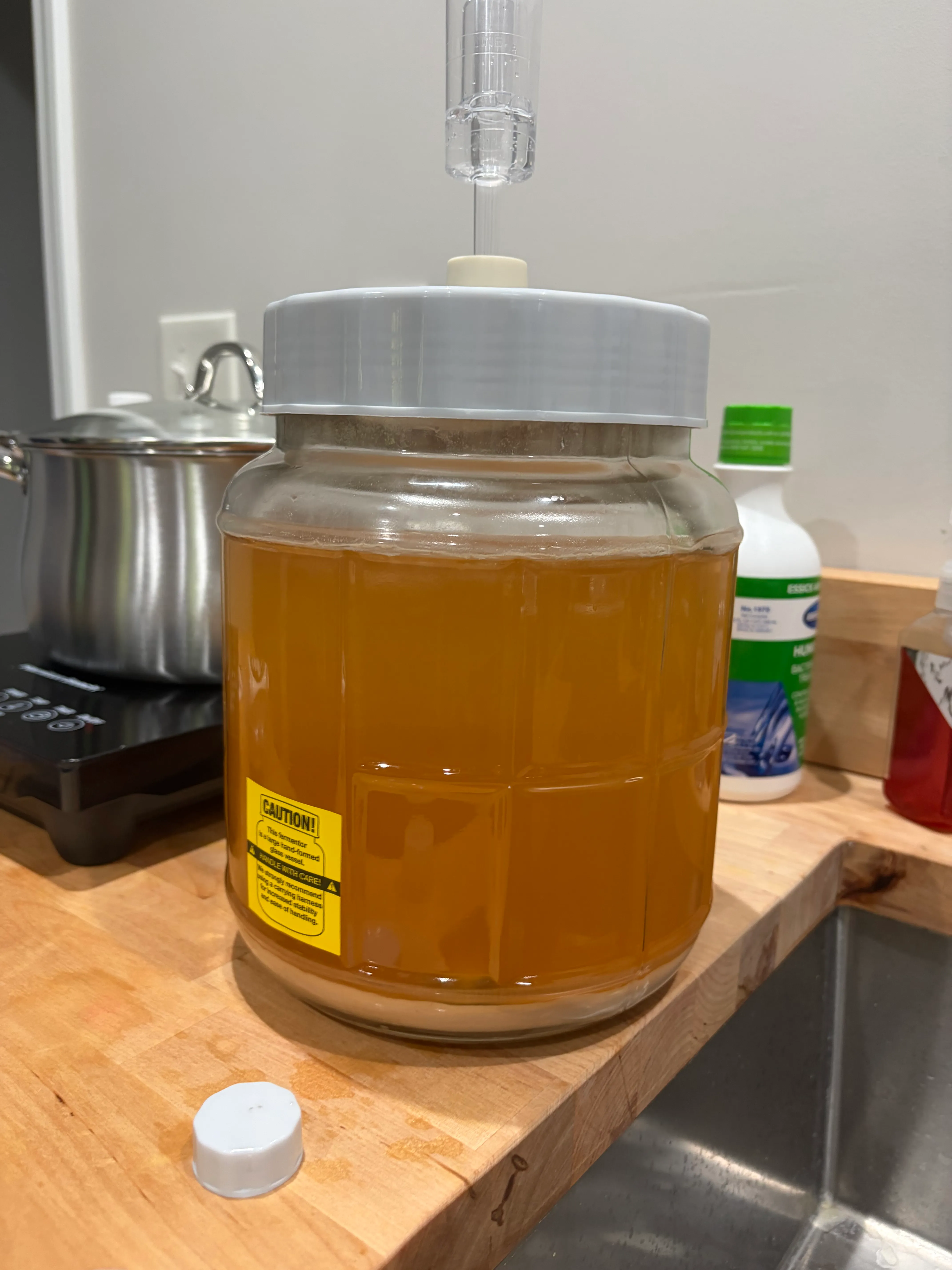
The clear golden color in these photos still gets me. Two weeks ago this looked like cloudy yeast soup; the week since has been one long slow-motion reveal:
What went in with it
The original two oak cubes from primary went out with the lees — after thirty days they’d given what they had to give. In their place, the secondary gets a fresh regime:
- Four medium-toast French oak cubes. Oak brings tannin, and tannin brings structure — a direct answer to that “flat in the body” note. Four cubes in one gallon is an aggressive pace, so I’ll be tasting weekly, starting at week one. With oak, the difference between “structured” and “lumber” is a week of inattention.
- One Tahitian vanilla bean, split lengthwise. Vanilla is oak’s classic partner, and it does something clever for a dry mead: it reads as roundness and sweetness without adding any actual sugar. Tahitian beans in particular lean floral and cherry-like, which should sit nicely against those lemon notes.
The decision I didn’t make
One thing I deliberately left out: water.
The jug isn’t filled all the way — the level sits at the base of the shoulder, which leaves a few hundred milliliters of air at the top. Standard advice says minimize headspace during aging, because oxygen sitting on the surface slowly stales the mead. The obvious fix is topping up with water.
But water would dilute the one thing I’m actively trying to build: body. Thinning a mead whose main critique is thin seemed like treating the chart instead of the patient. And freshly racked mead carries a secret advantage — it’s still saturated with CO₂ from fermentation, which off-gasses for days and lays a protective blanket over the surface. Between that and the gentle closed transfer, the next few weeks are covered. If bulk aging runs long, I’ll close the gap with sanitized glass marbles — raises the level, dilutes nothing.
What’s next
The batch sits sealed under airlock while the oak and vanilla work. Weekly tastes. When it’s where I want it, the cubes come out, the mead gets stabilized, and then comes the fun part: bench trials — little tasting-glass experiments for sweetness levels and maybe a spice or two, so any mistakes happen in a glass instead of the gallon. The winner gets scaled up, sweetened with the same wildflower honey it started with, and bottled.
And that newly-empty fermenter isn’t staying empty. Batch two — a sparkling version, champagne yeast, real bottle conditioning — starts now.
Batch one vitals, updated: OG 1.090 → FG 1.000 (confirmed twice) · ~12% ABV · dry · racked to secondary day 15 on four French oak cubes and a Tahitian vanilla bean.