
The Tincture Library, Round Three
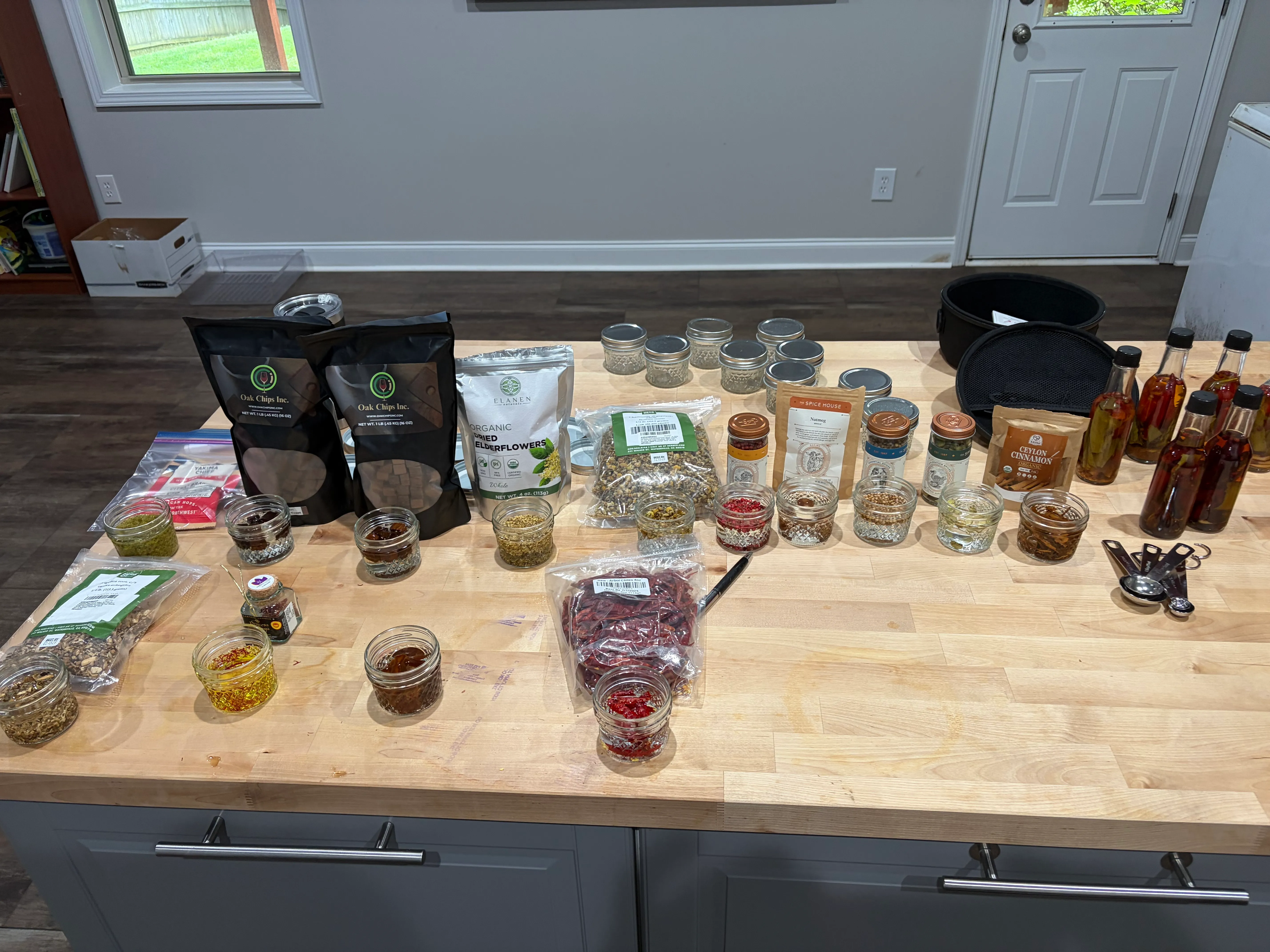
Back in August I wrote about why I made a dozen jars of spice tincture. The short version, for anyone joining late: spice added straight to a fermenter is an irreversible guess. You can’t taste-and-stop, and you find out you overdid the clove three weeks after there’s anything you can do about it. A tincture — the spice steeped in neutral high-proof alcohol — turns that gamble into a bench exercise. Extract each flavor separately, then build the blend by dosing measured drops into small samples of finished mead. Taste, adjust, scale up. Overshooting becomes impossible, because the tasting glass absorbs the mistakes instead of the batch.
That was the pitch when there were twelve jars. This week the library had its third growth spurt: fourteen new jars went under vodka, and it’s time to publish the full roster.
Why keep going?
Because the library is turning out to be the most quietly powerful tool in the meadery. Three reasons it keeps growing:
The drops are reversible; the batch is not. Every tincture on the shelf is a flavor I can audition against any mead, in any combination, at the cost of a few drops. Even the famously risky ones — the florals that can go full potpourri, the chilis, the coumarin-heavy tonka — are safe to explore this way. A failed tincture costs one small bottle. A failed addition costs a season.
It decouples extraction from fermentation. CO₂ scrubs aromatics out of an active ferment, and steep times in a carboy are a one-shot decision. In a mason jar on the counter, each spice gets exactly the steep it wants — days for citrus zest, a month for oak — and then waits patiently in glass until a batch needs it.
It’s how you design a mead instead of discovering one. The long game here is building toward specific target flavor profiles from the start, not just seeing what a batch becomes. That means having a palette before you paint. More on that ambition in a future post.
The housekeeping
Method notes for this round, all learned the slightly harder way in rounds one and two:
- 100-proof vodka again. Proof beats brand — alcohol is the solvent, and a clean 100-proof extracts hard spices better than any premium 80-proof. The good bottles stay in the bar cart.
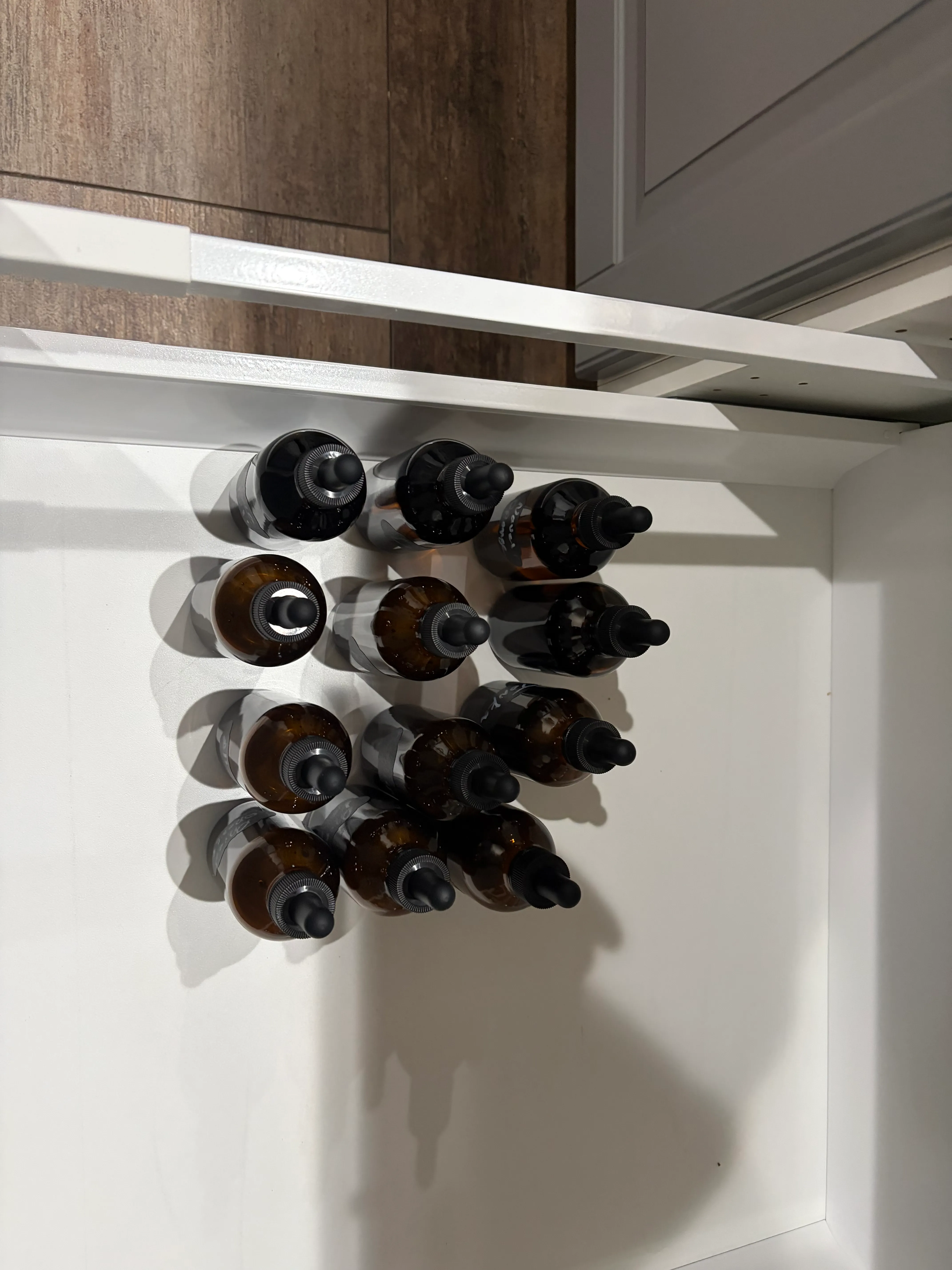
- Steep in mason jars, store in amber. Wide-mouth jars for the load-shake-taste phase, then everything strains into dark brown medicine-style dropper bottles. The dropper is the dosing tool.
- Darkness, twice over. UV degrades the volatile aromatics that are the entire point, so the finished bottles are amber glass — and the whole finished library now lives in a dark drawer on top of it. Belt, meet suspenders. Light never touches these again until they’re being dosed.
Round three: the fourteen
Started this week, steeping now:
- Saffron (Spanish) — the aristocrat of the batch. Potent, pricey, and dosed in single drops; a pinch of threads is all one bottle needs.
- Elderflower — delicate, honeyed floral. A natural companion for a honey wine, if it behaves.
- Chamomile — squarely on the “can turn to potpourri” watchlist, which is exactly why it gets the tincture treatment instead of a spot in a fermenter.
- Citra hops — the experiment of the round. Citra’s mango-citrus aroma, without brewing a braggot to find out if hops and honey get along.
- Red peppercorn — bright, fruity, gently spicy; a different animal from black pepper’s bite.
- Nutmeg — warm baking depth, strictly a supporting player.
- Ceylon cinnamon — the soft, complex cinnamon, not the red-hot candy one.
- Coriander — citrusy-spicy seed, a classic brewing spice earning a second, bigger bottle.
- Cardamom — the backbone of a future spiced mead; round two’s bottle is good enough that it earned a deeper reserve.
- Angelica root — earthy, green, slightly musky — one of gin’s secret structural notes.
- Arbol chili — clean heat, no fruit distraction. A drop or two, someday, somewhere.
- American oak & French oak — the two oak “dials,” restocked. Being able to add oak by the drop, and blend the coconut-vanilla American against the tighter spice of the French, has already changed how I think about oak entirely.
- Dried apricot — the strategic one. There’s an apricot mead fermenting on real fruit right now, and when the fruit comes out there’ll be a decision: if it needs more apricot, does it get a second dose of fruit — or a controlled, haze-free tincture instead? Now that option exists.
The full library
For the record — and because I keep having to count them myself — everything made to date:
Round one (August, the original dozen): navel orange, Meyer lemon, Seville orange, Sorrento lemon, hibiscus, ñora chili, cacao nib, clove, juniper, tonka bean, allspice, star anise.
Round two (late August, the spiced-mead leads): green cardamom, fresh ginger, peppercorn & grains of paradise, coriander, French oak, American oak.
Round three (this week): the fourteen above.
That’s a library in the thirties, spanning citrus, florals, warm spices, wood, chocolate, chili heat, hops, and now fruit. Every one of them is a question I can ask a glass of mead in thirty seconds, instead of a bet I have to place a season in advance.
The vodka math is holding up, too. When round one drank a liter faster than expected, the reorder was two more liters on the theory that “we will find enough tinctures over time.” Fourteen jars later, the theory looks sound.