
Retiring the Wet Towel
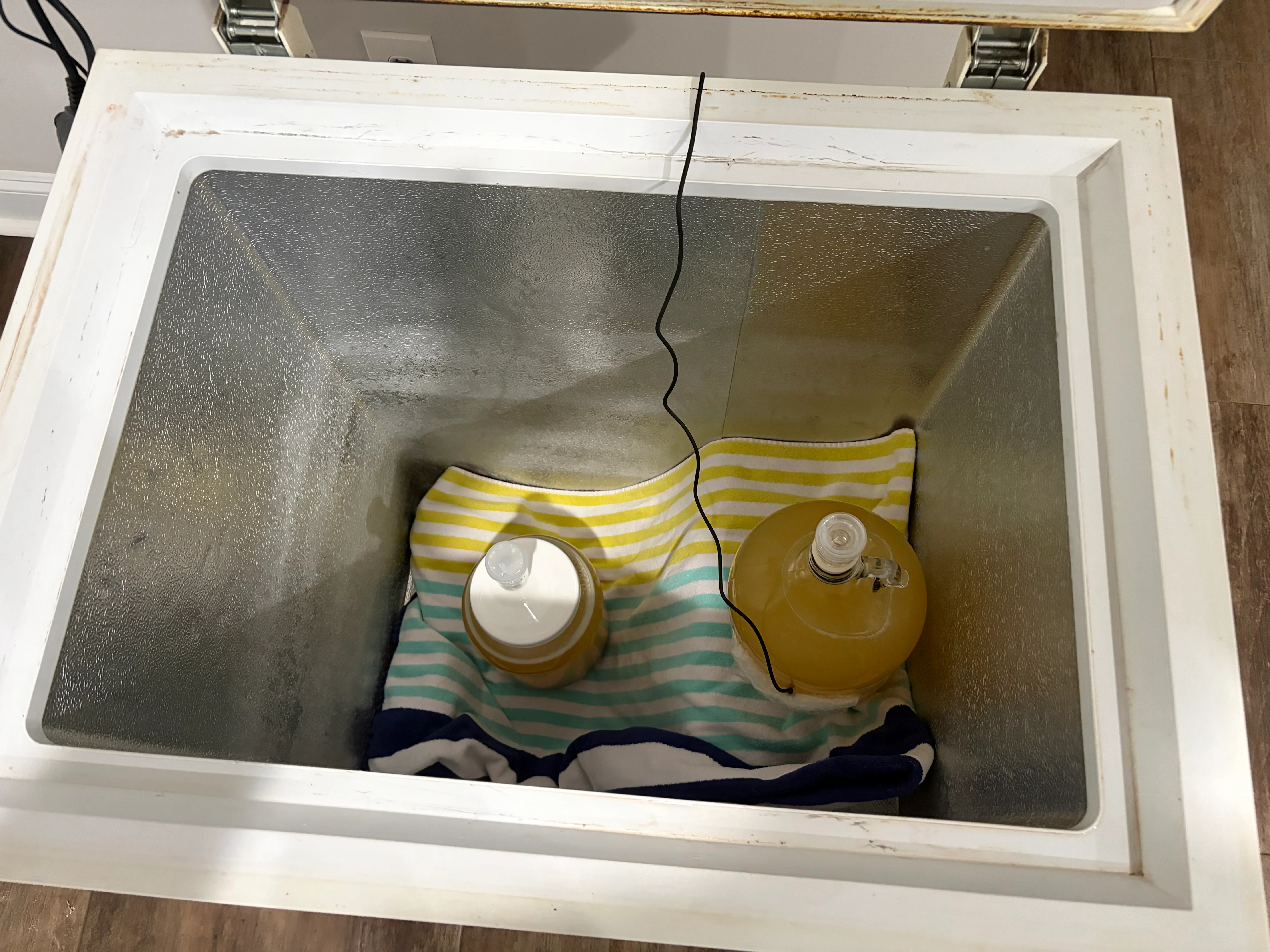
For the entire life of the Batch Two and Three co-brew, temperature control in this meadery has been a wet towel. A towel draped over the fermenter, wicking into a sink bath, re-dipped every morning and every evening because wicking alone won’t keep it wet — evaporative cooling on the honor system. It held the must at 64 °F through an entire primary fermentation, which I’ll defend to anyone, but it demanded attention twice a day, every day, for three weeks.
That era is over. The old chest freezer from the garage has been scrubbed, moved to the basement, and given a brain.
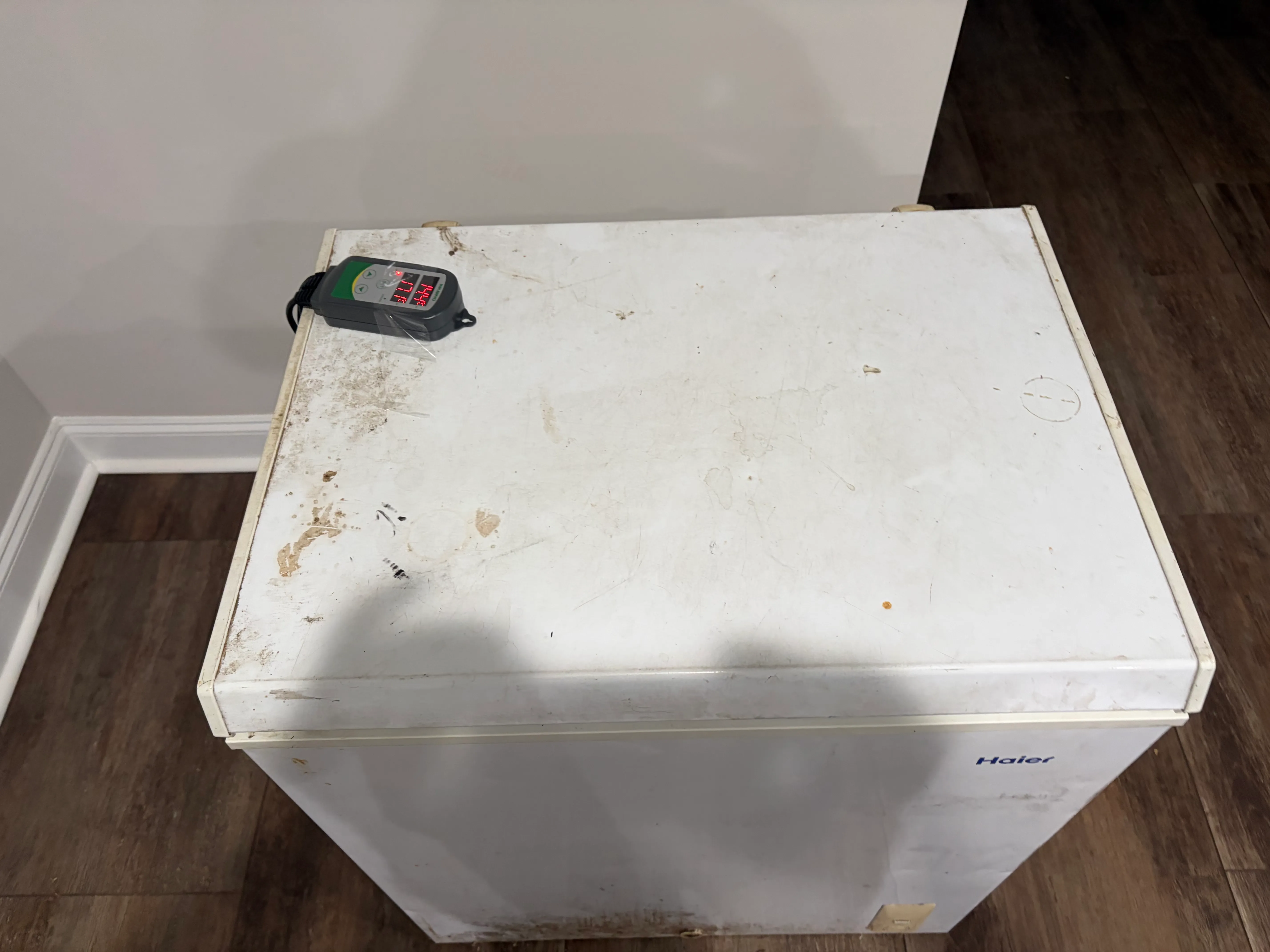
A freezer that thinks it’s a cellar
The freezer itself does one thing: get cold. The intelligence is the little controller sitting on top — it reads a probe inside the chamber and only lets the freezer run when the temperature drifts above the set point. The freezer never gets to be a freezer; it gets to be a very well-insulated cellar that occasionally hums.
Before any mead went near it, it ran a dry rehearsal: a half-gallon jug of water inside, controller set, and a couple of days of watching. It held the water at a steady 62 °F. No swings, no runaway cold, no drama. That test mattered — the failure mode of an unproven chamber is finding out with a batch inside it.
Rack day: one primary, two paths
The chamber’s first residents arrived the same day it passed. The co-brew finished bone dry — the hydrometer read 1.000 on Friday and hadn’t moved by the weekend, which makes it official: the tupelo primary fermented from 1.091 to right around twelve percent, and the champagne yeast left nothing on the table.
So it was time to split. One conical of finished tupelo mead became two batches with two futures.
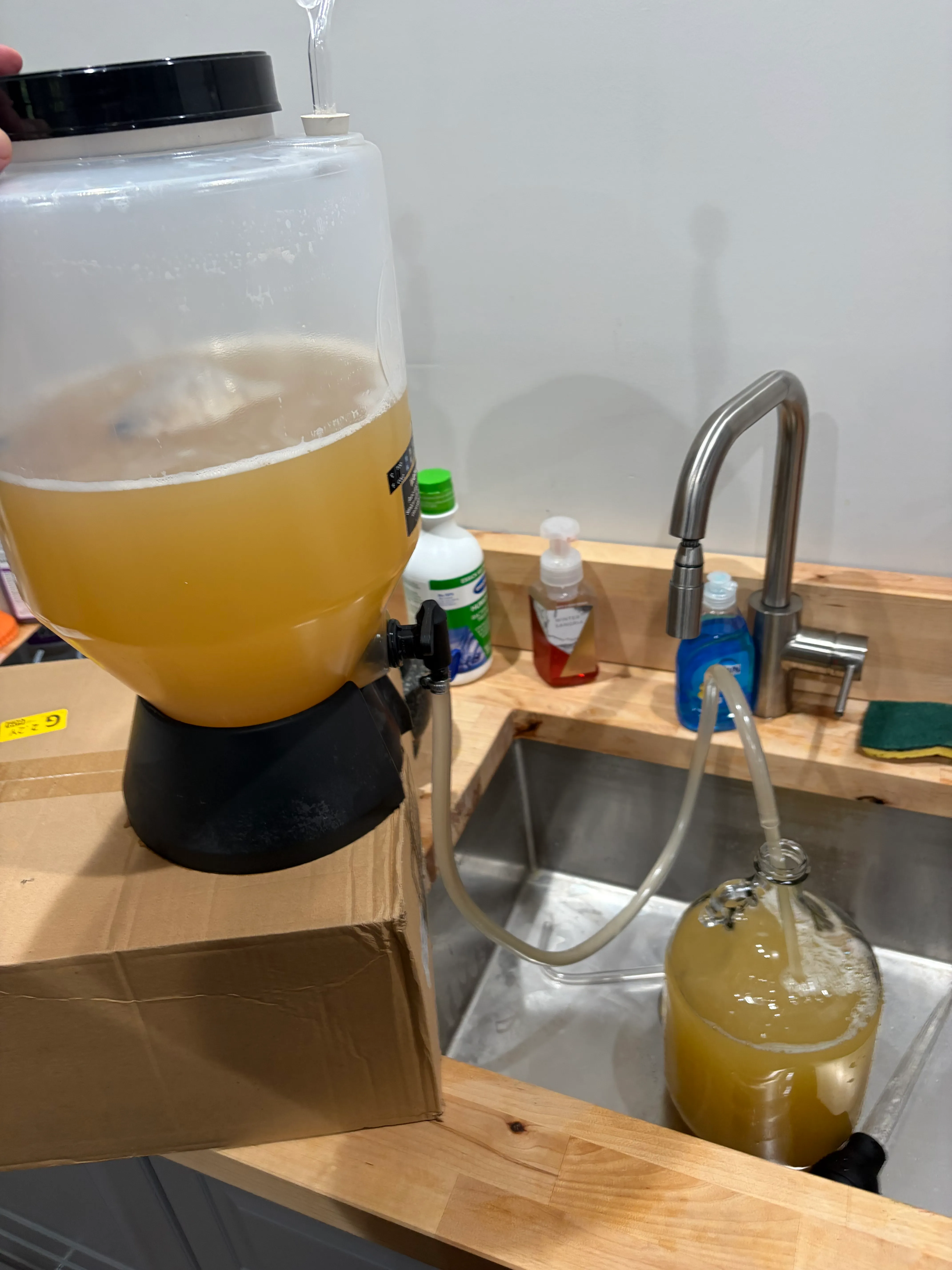
Batch Two went into a glass carboy, and it went in clean. I had oak on the bench and a standing debate with myself about it, and I’ve decided: no oak. This one is destined to be a sparkling mead, and I want the tupelo doing the talking — crisp, floral, nothing between the honey and the bubbles. It has one job now: sit in the cold and drop clear, so it can be primed and bottled in a couple of weeks.
Batch Three got the interesting ride. Waiting for it in a wide-mouth gallon was 140 grams of dried apricots — chopped, hot-steeped, never boiled — plus a dose of pectic enzyme to head off the haze that apricots love to throw.
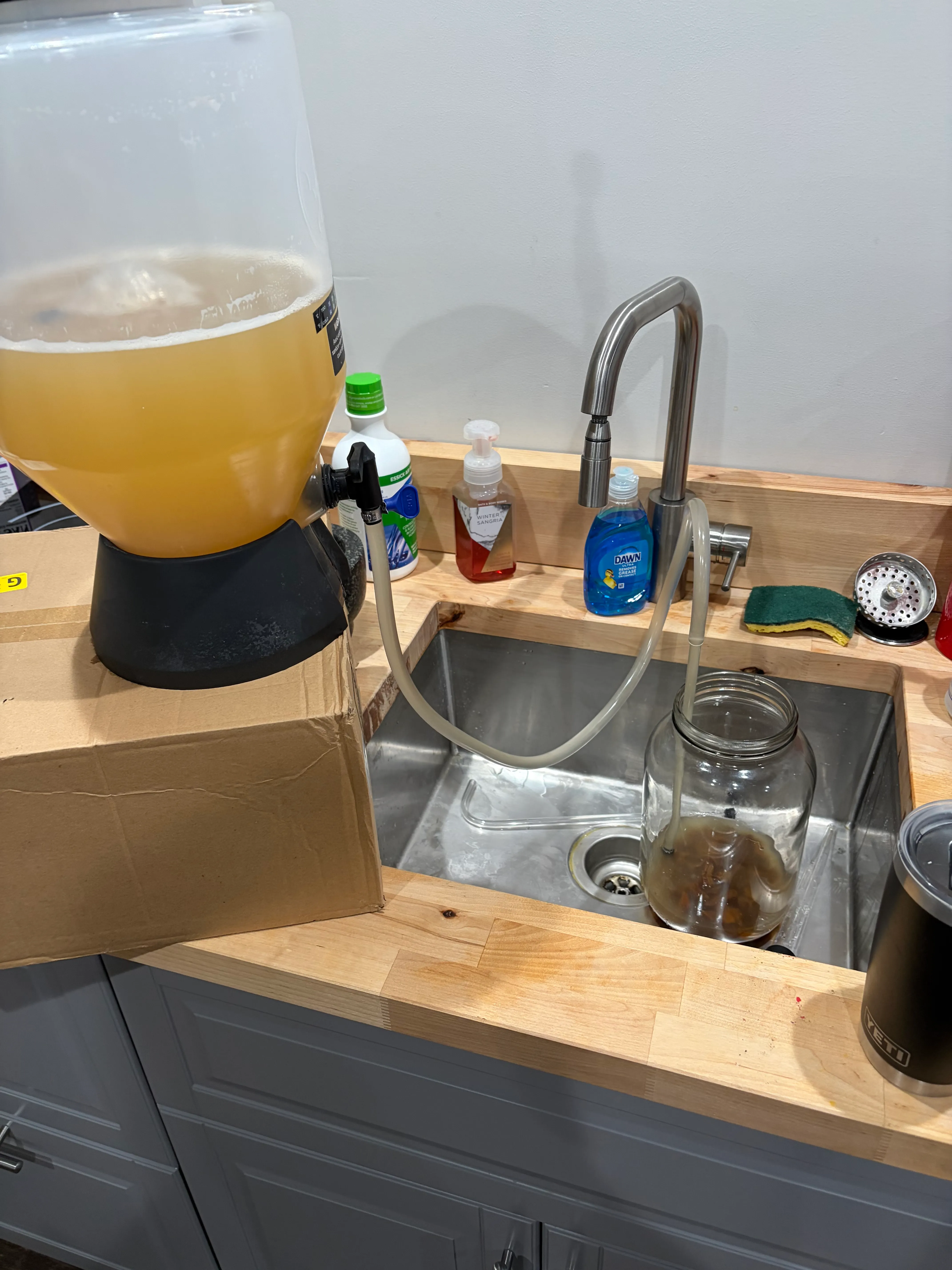
A confession about those apricots: I tasted one before they went in, purely for quality control, and they are dangerously good. The plan was for the leftovers to become future melomel stock. The revised forecast is that they become snacks. I make no promises.
They’re also quite sweet — which means Batch Three’s fermentation is almost certainly going to wake back up. The mead is sitting at twelve percent, and champagne yeast doesn’t even clear its throat until sixteen. That fruit sugar is a snack for the yeast the same way the leftover apricots are a snack for me. The airlock will be talking again within days, and that’s not a problem; it’s the plan working. The sweetness question gets settled properly at the end, after the fruit comes out.
The probe placement decision
Here’s the detail I thought hardest about: where the temperature probe goes. Both batches share one chamber, but they don’t sit in the same spot — Batch Two is up on the compressor ledge, Batch Three is down on the floor. Cold air sinks, so the ledge should run just a touch warmer than the floor.
So the probe went against Batch Two’s glass, on the ledge, wrapped in bubble wrap so it reads the vessel instead of the air. The logic: control from the warmest spot in the chamber. If the warmest vessel is being held at the set point, nothing in the chamber can be running warmer than that — the floor just rides slightly cooler, which suits a clearing mead fine. Control the ceiling, and the floor takes care of itself.
The other confession
Rack day was not flawless. I was mid-transfer on Batch Three while also fiddling with the chamber setup, and a wide-mouth gallon fills faster than you think when you’re looking at something else. It overfilled. The quarter-gallon of spare mead I’d planned to keep as a top-up-and-tasting reserve went into the vessel (and a little onto the bench) instead.
Note to self, now in permanent ink: do not multitask when racking. The siphon does not pause while you adjust a probe.
What happens now
Nothing — and that’s the point. I’m traveling for the next eight days, and for the first time since July, the mead doesn’t care. No towel to re-dip, no ice bags to rotate, no bath level to check. The chamber holds its temperature whether I’m in the basement or another state. Batch Two clears, Batch Three ferments its fruit, and the controller quietly hums the freezer on and off.
The first taste of apricot mead happens when I get back — day nine on the fruit, right on schedule. The wet towel has been laundered and returned to civilian life with honors.