
cooking recipes
Pique: A Grandmother's Hot Sauce, and the Vinegar I Ran Out Of
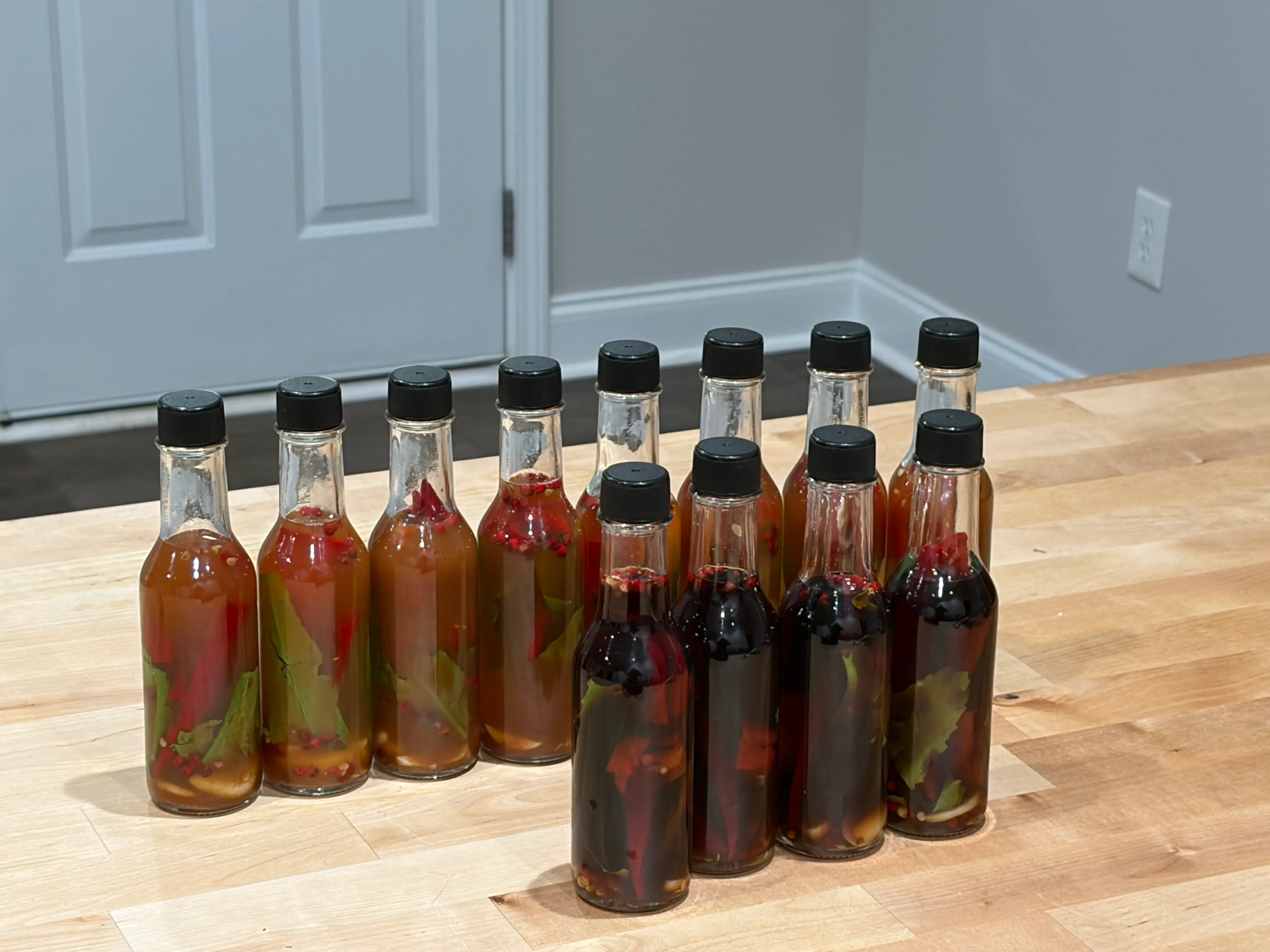
There’s a kind of recipe that resists being written down, and Pique is one of them. It’s a Puerto Rican country hot sauce — the kind an abuela keeps on the table and tops off for years. Ask her for the recipe and you’ll get a shrug and something like “put the ingredients in the way your heart tells you.” Helpful, right?
So this isn’t really a recipe. It’s a method, and a story about the batch I just put up.
What Pique actually is
Pique is unblended and fermented — that’s the whole identity. No blender, no cooking, no purée. You pack whole ingredients into a bottle, cover them in live (raw, unpasteurized) vinegar, and let time do the work. What starts as sharp “hot vinegar” slowly turns into something with real depth and character. And it never really ends: as you use it, you keep topping the bottle back up with raw vinegar, and it gains character the longer you run that cycle.
The build, roughly — and roughly is the point — per bottle:
- ¼ tsp sea salt (I used Maldon)
- 10–12 pink peppercorns, left whole
- 2 cloves fresh garlic, rough-cut to fit
- 2–3 leaves culantro (its louder cousin cilantro will do, but culantro is the real thing)
- 2 red chilis you like — Aji Caballero is traditional; I used Cayenne
- ½–1 Red Habanero or Scotch Bonnet (same pepper, different name in Caribbean vs. Mexican kitchens), cut into quarters or eighths
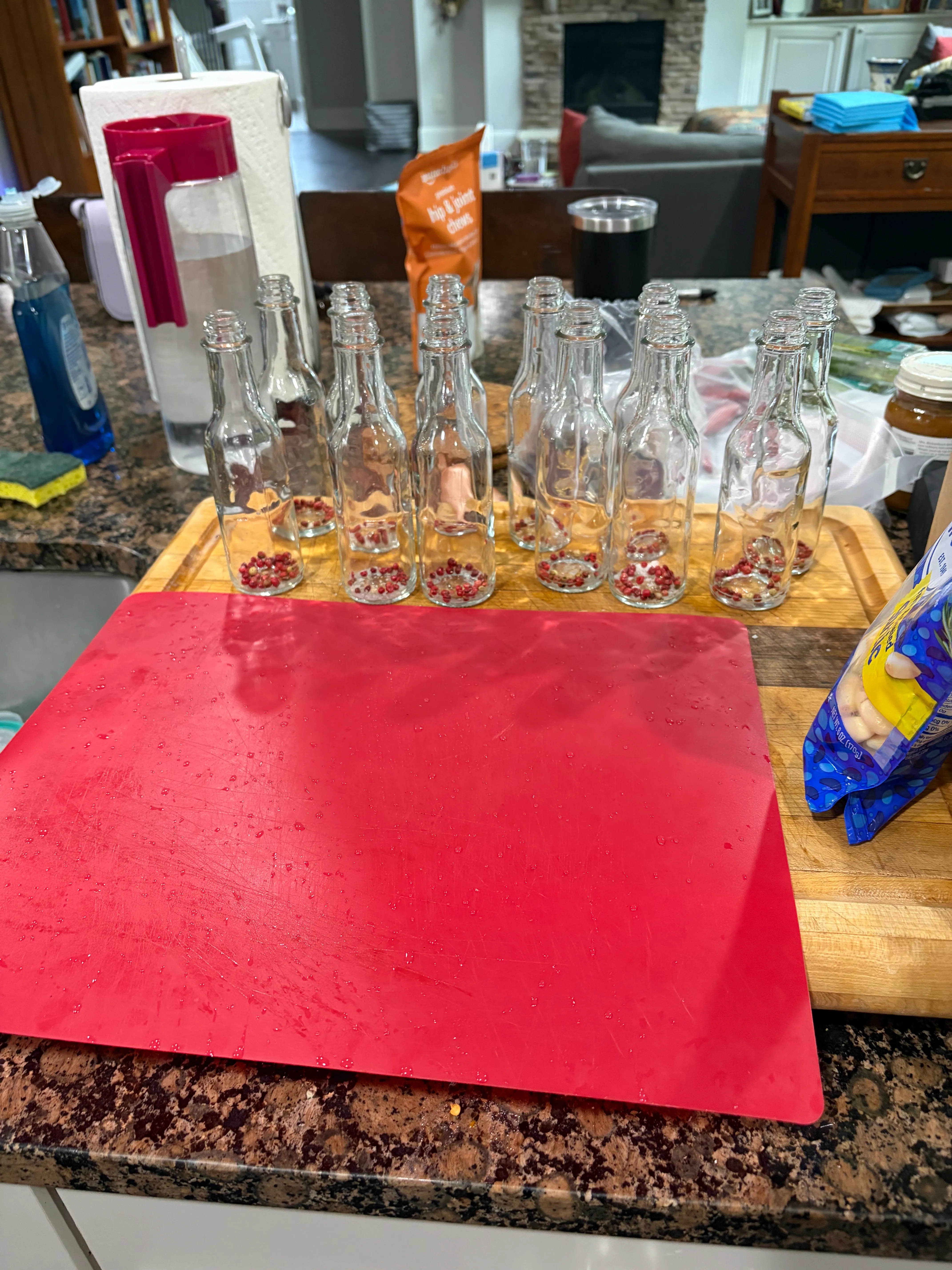
It starts unglamorously — salt, pink peppercorns, and garlic in the bottom of sterilized bottles:
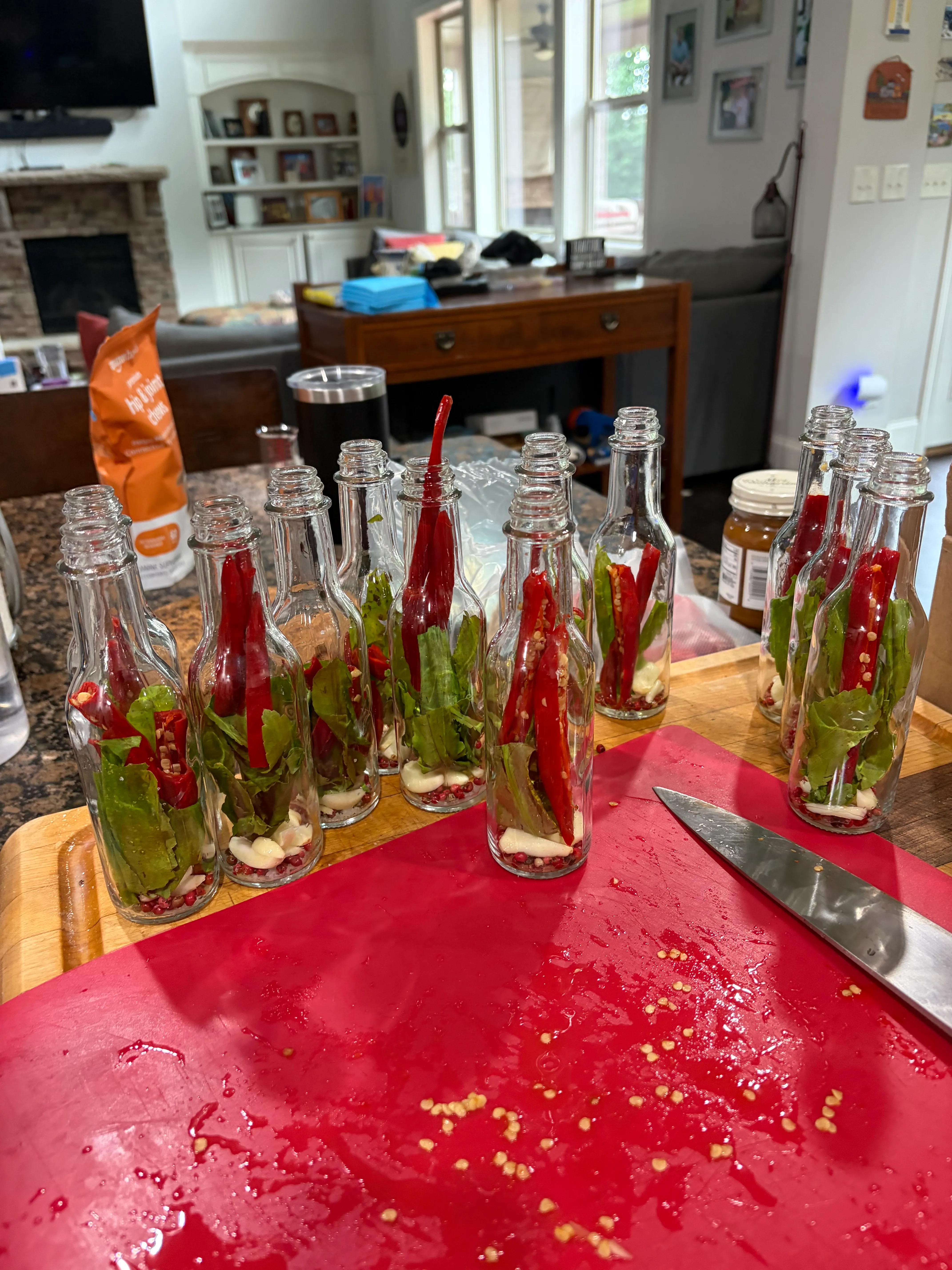
Then the chilis and culantro get packed in on top, pushed down with a chopstick or a straw until each bottle is full:
Wear gloves. Habaneros do not forgive, and you will touch your face.
The part where it went sideways
I planned to make it in quantity — a dozen bottles — and I hit the snag I always seem to hit when I scale something up. I ran out of vinegar.
The first eight bottles got Bragg’s raw apple cider vinegar, which is the classic move: it’s alive, cloudy with “the mother,” exactly the live-culture base a ferment wants. Then bottle nine came up dry, and it was late, and I was too tired to drive to the store. So I looked at what I had.
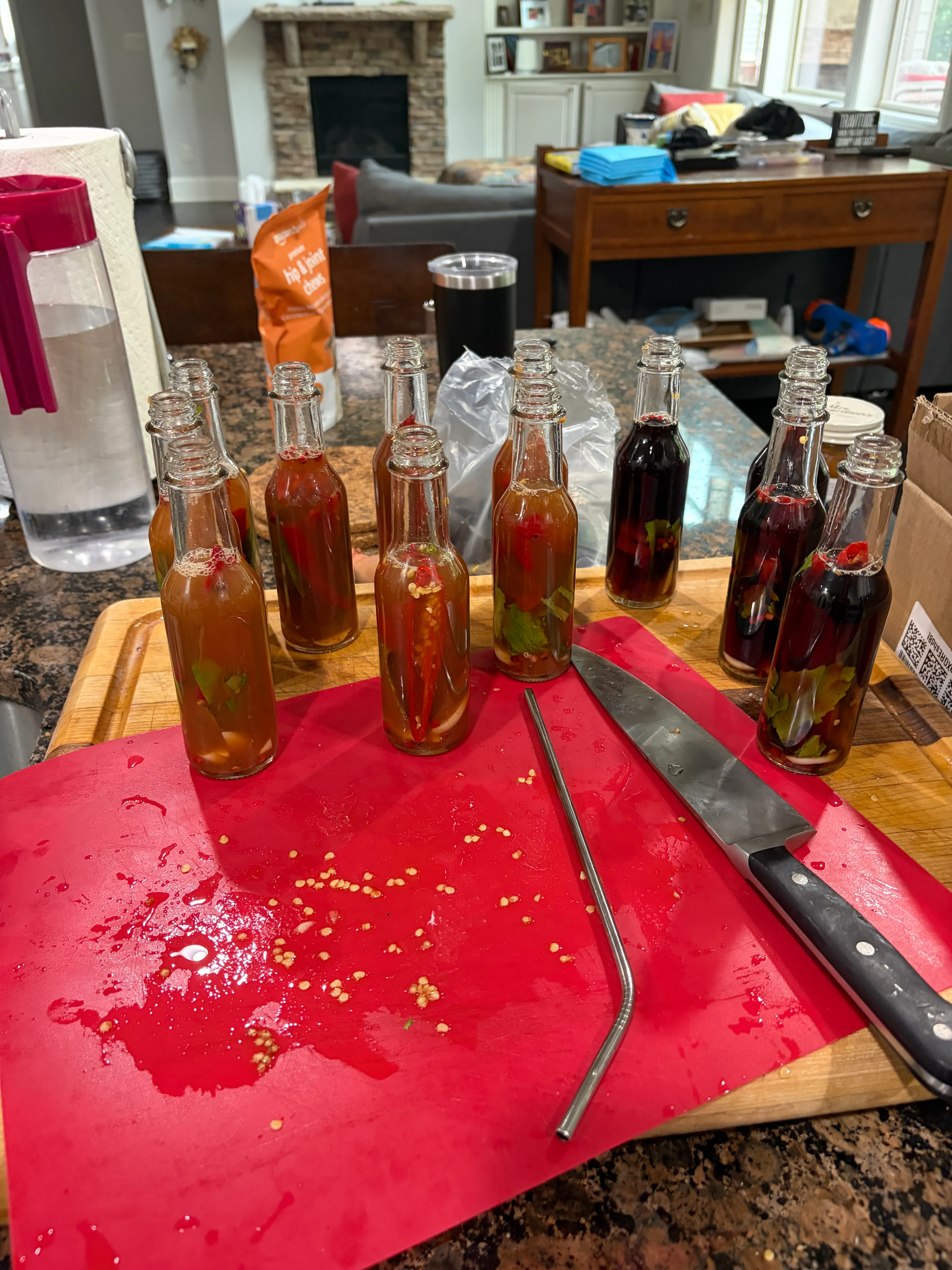
What I had was an aged Spanish Sherry vinegar — the good stuff, barrel-aged in oak. The problem: barrel-aged means not alive. Sherry vinegar has been through oak and time, which gives it gorgeous flavor but not the live culture that drives the ferment. So the last four bottles got the Sherry treatment. You can see the split right in the glass — the amber bottles are the Bragg’s, the deep garnet ones are the Sherry:
I honestly have no idea how the Sherry four will turn out. Here’s why I’m not worried. Because Pique is a topping-up sauce — you keep feeding it raw vinegar over its life — even the “wrong” start isn’t a dead end. At worst, the Sherry bottles carry an extra layer of oak-and-age character while I feed Bragg’s back in over the coming weeks to get the live fermentation going. Worst case is more complexity, not a ruined batch. That’s a pretty good worst case.
So now I’ve got an accidental experiment: eight bottles the traditional way, four that took a detour through an oak barrel. I’ll report back once they’ve had a couple of weeks to become themselves.
Why bother fermenting at all
You could blend peppers and vinegar and call it hot sauce. Plenty of great sauces work exactly that way. But the ferment is what moves Pique from hot to interesting — it rounds the raw vinegar’s edge, pulls flavor out of the whole peppers and garlic, and builds a savory depth you can’t get by just mixing. It’s the same reason I’m chasing fermentation in the mead: the microbes make something you can’t shortcut.
Two weeks, and I’ll know how the oak-barrel gamble paid off.